Shadowboxing for complete beginners: what to do in each round
Shadowboxing for beginners often becomes random punching because there is no bag or partner to organise the round.
Shadowboxing for beginners often becomes random punching because there is no bag or partner to organise the round. A better approach gives each round one job. Practise a stable stance, add small movement, build one or two straight punches, and imagine a clear target. The session can be short; concentration matters more than filling every second with action.
Shadowboxing is useful practice, but it does not replace coached feedback. Repeating an unnoticed balance or hand-position error can make that pattern more familiar.
Set up a safe practice space
Clear enough floor space to step in every direction without reaching furniture, walls, people, or pets. Wear stable training shoes when the surface requires them. A mirror can help you see obvious posture changes, but staring at your reflection can also make movement stiff. Alternate short mirror checks with rounds facing open space.
Use a timer with generous rest. Beginners can start with three or four rounds of one to two minutes and rest for roughly the same amount of time. Those numbers are examples, not a fitness test. Shorten a round when attention or technique fades.
Keep punches controlled and do not lock the elbow into the air. Shadowboxing is not a contest to create maximum speed or power without a target.
Round one—build a position you can return to
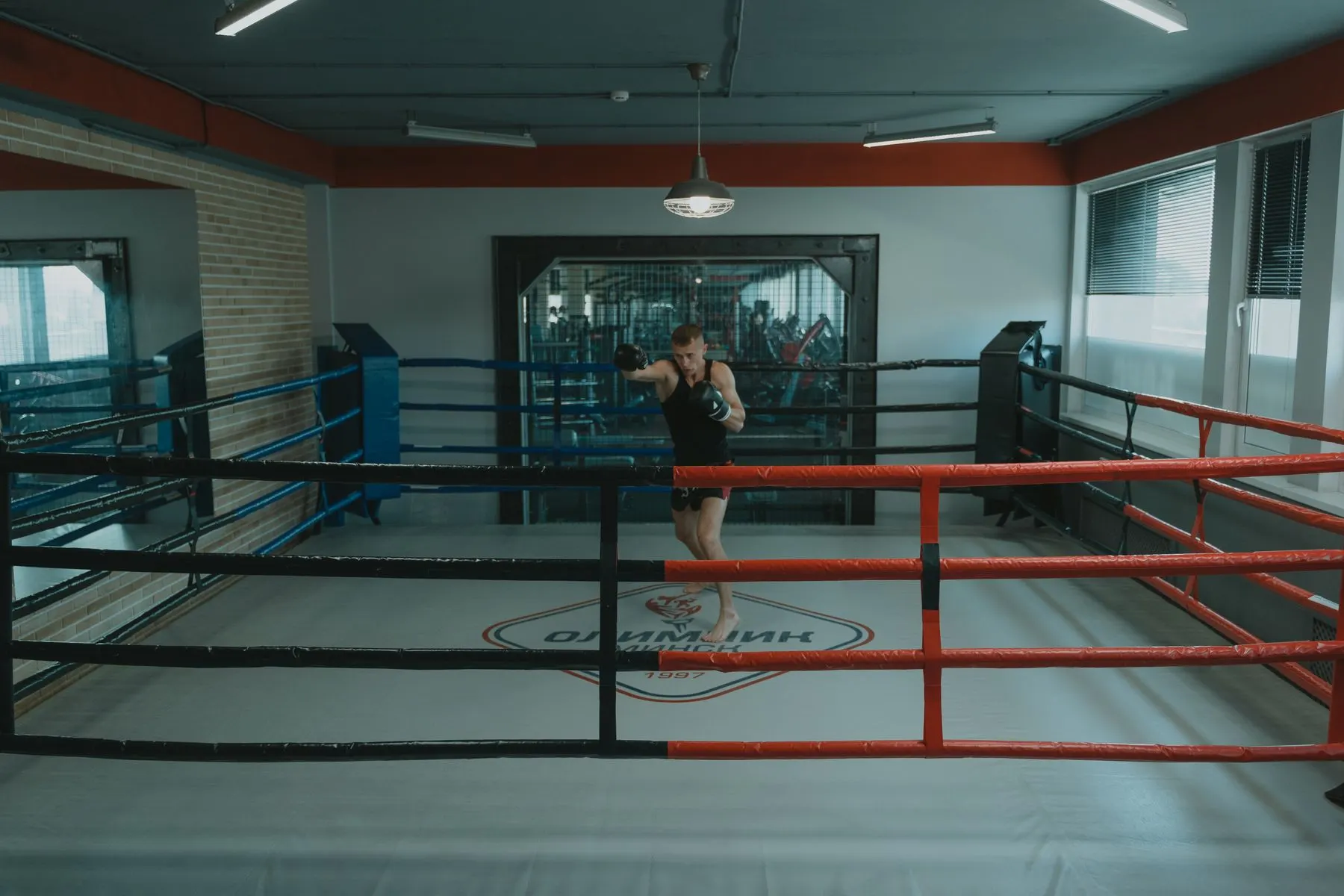
Begin in the stance a coach has shown you. Settle the feet, keep the knees soft, let the shoulders relax, and hold a comfortable guard. Spend part of the round doing nothing more than checking that position, breathing, and making a relaxed fist only as needed.
Add small steps forward and backward. Move the foot closest to the direction first so the feet do not cross. Pause after each step and ask: can I move again without reorganising everything? If the answer is no, make the next step smaller.
Round two—give the jab one clear target
Imagine a target at your own shoulder height rather than punching vaguely upward or across the room. Extend one controlled lead straight, let the shoulder and arm work without reaching the head far beyond the front knee, then return the hand to its starting position.
Reset between repetitions. The return is part of the punch. Exhale briefly, keep the other hand organised, and notice whether the feet remain stable. Add an occasional step before the jab only when the stationary version stays balanced.
Do not chase speed. A slow jab that begins and ends in a usable position gives you information. Ten hurried punches that pull the body forward mostly practise hurrying.
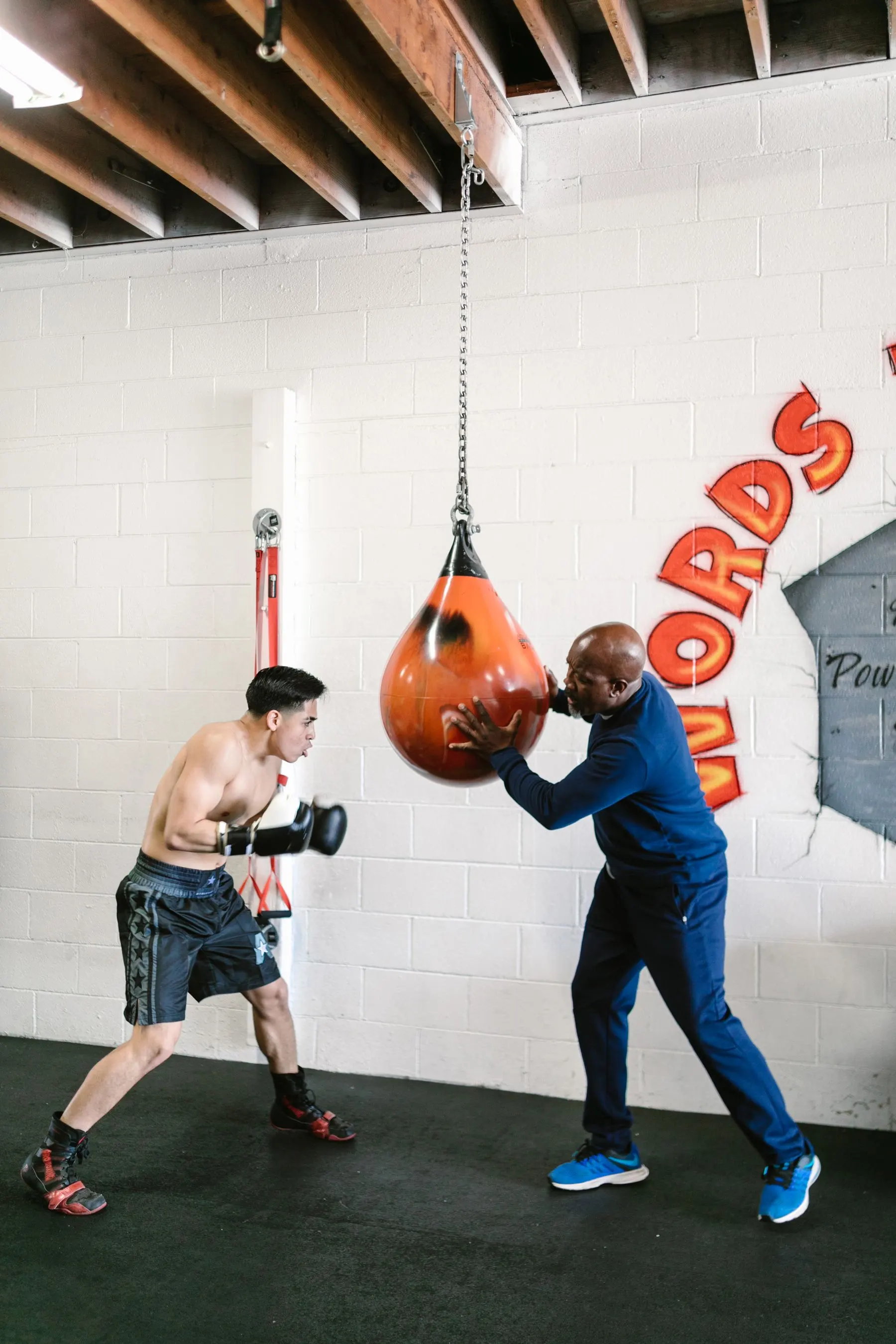
Round three—connect a simple one-two
Add a rear straight after the jab. Think “lead straight, rear straight, return” rather than trying to hit with both hands at once. Let the rear side rotate naturally under coaching guidance and avoid throwing the rear shoulder past the front foot.
After each one-two, reset or take one small step. You are practising the ability to finish a combination in balance. If the rear straight causes the feet to twist into an unstable position, reduce the range and speed.
You can vary the imagined situation without adding more punches: target present, target moves away, you step and repeat. Visualization gives the round a reason, while random combinations often lose stance and distance.
Round four—move, choose, and leave space
Combine the earlier pieces at an easy pace. Move for a few seconds, stop in stance, choose a jab or one-two, return the hands, and move again. Include quiet moments. Real practice does not require constant punching.
Imagine where a partner might be and keep an appropriate distance. Do not bend at the waist or perform advanced defensive movements you have not been taught. The objective is a simple decision loop: see, move, punch, recover.
What to review after each round
Choose only one observation. Did the feet cross? Did the non-punching hand drift? Did your chin lift? Did breathing stop? Trying to correct six details at once usually makes the next round tense.
Video can help if filming is allowed and no one else is captured, but a short clip is not the same as expert feedback. Bring one recurring question to a coach. Boxing and Strength Classes offers context for combining solo repetition with structured instruction in Seoul.
Common shadowboxing mistakes
The first is performing for the mirror with exaggerated head movement and long combinations. The second is punching at full force into empty space. The third is letting the feet stay planted while the upper body leans farther with every punch.
Another mistake is adding complexity whenever a round feels boring. Repetition should become more precise before it becomes more complicated. Finally, avoid using shadowboxing through shoulder, elbow, wrist, or other pain. Stop and seek appropriate guidance rather than adjusting technique from an article.
FAQ
What should a beginner think about while shadowboxing?
Give each round one focus such as stance, small steps, a jab, or returning to guard. Imagine a clear target and check whether every action finishes in balance.
How long should a beginner shadowbox?
Three or four focused rounds of one to two minutes can be enough to begin. Round length should match the person's concentration, technique, space, and current conditioning.
Can shadowboxing teach boxing without a coach?
It can reinforce movements and improve familiarity, but it cannot reliably identify every error. Periodic coached feedback helps prevent repeated mistakes from becoming habits.
A useful beginner shadowboxing routine is deliberately limited. Build one stance, one step, and one simple combination well enough that each round has a clear beginning and return point.
Train With BODY SMITH