Orthodox vs southpaw for beginners: how a boxing stance is chosen
orthodox vs southpaw for beginners: The orthodox vs southpaw question for beginners sounds like a permanent identity choice. It usually is not. A starting...
The orthodox vs southpaw question for beginners sounds like a permanent identity choice. It usually is not. A starting stance gives you a repeatable way to organise your feet, hands, balance, and basic punches while a coach observes how you move. Handedness is useful information, but it is not the only information.
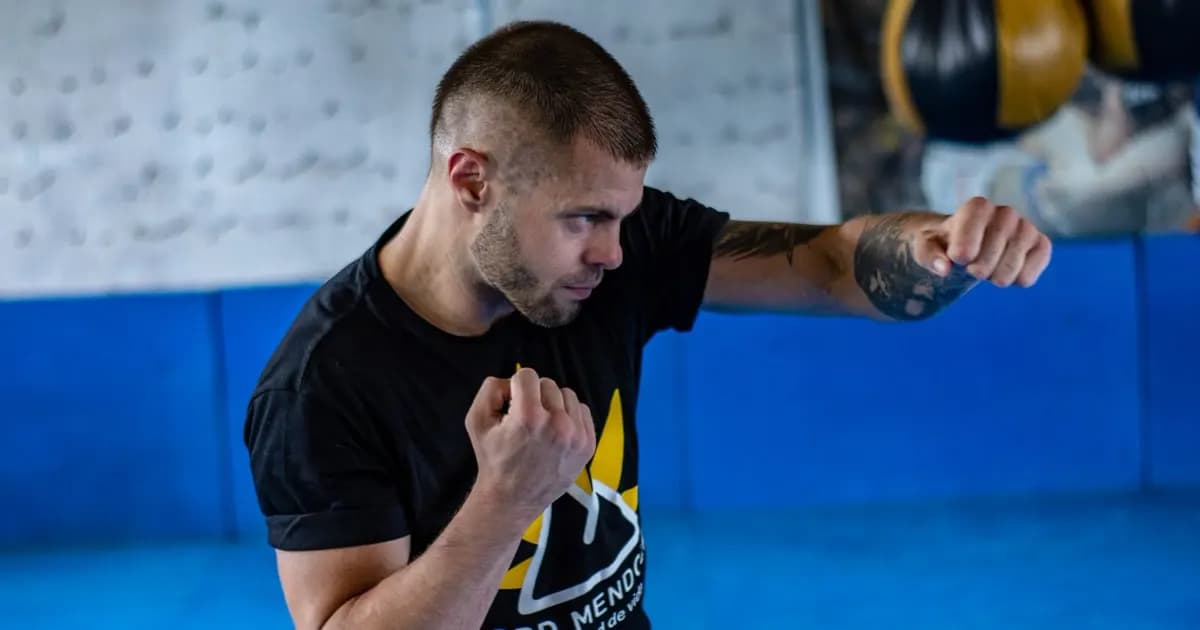
An orthodox boxer normally stands with the left foot and left hand forward. A southpaw normally places the right side forward. Neither stance is inherently better, more advanced, or more powerful.
What changes when the stance changes
In an orthodox stance, the left hand is generally the lead hand and the right hand is the rear hand. In southpaw, those roles reverse. The lead side is closer to the target and often handles range-finding actions such as a jab. The rear side has more distance available to rotate through a straight punch.
The stance also changes which foot initiates familiar movements and how the hips and shoulders feel when turning. This is why choosing a stance is more than deciding which hand should throw hardest. A beginner must be able to stand, step, stop, and return to balance.
Handedness is a starting clue
Many right-handed beginners begin orthodox, while many left-handed beginners begin southpaw. Keeping the dominant hand in the rear can make the rear straight feel coordinated and natural. That convention provides a useful first test.
It is not a law. Some people have a dominant leg that affects balance, prior experience in a board sport or martial art, or a strong preference for one side. Others write with one hand but perform athletic tasks more comfortably on the other. A coach may test both positions briefly before settling on the clearer starting point.
What matters early is not which stance produces one impressive punch. Look for the side that allows a stable base, relaxed shoulders, a natural guard, and controlled movement in several directions.
A simple way to test without overthinking
Stand in a comfortable athletic position, then place one foot slightly forward rather than stretching into a long line. Keep enough width between the feet to balance. Try the position on both sides while staying relaxed.
From each stance, take small steps forward, backward, left, and right. Avoid crossing the feet. Stop after each step and notice whether your weight settles evenly enough to move again. Then extend a slow lead straight and rear straight under supervision.
One side may immediately feel more organised. If both feel awkward, that is also normal. New movements are unfamiliar, and “comfortable” can simply mean returning to an old habit. A coach is looking for repeatable balance, not instant fluency.
Why switching too often slows learning
Beginners sometimes switch stance every round because the other side feels temporarily easier. This doubles the number of foot positions, hand roles, and movement patterns being learned. The result is often two uncertain stances instead of one usable base.
Choose a starting stance with a coach and give it enough consistent practice to reveal real patterns. You can revisit the decision if balance remains poor or another stance repeatedly works better. That is different from changing sides whenever one drill feels difficult.
Advanced boxers may switch for tactical reasons, but that skill depends on fundamentals that are outside a beginner's first task. Stance switching is not required to become coordinated or to enjoy non-competitive boxing training.
How coaching affects the decision
A coach can see details that are hard to judge in a mirror: whether the feet become too narrow, whether the rear heel and hip can move naturally, whether the head drifts beyond the base, and whether the guard collapses during a step.
Clear feedback also separates a stance problem from an ordinary beginner problem. Feeling clumsy during a jab-cross does not necessarily mean the stance is wrong; the timing may simply be new. Boxing and Strength Classes provides context on learning these movements within a structured session in Seoul.
English coaching can be helpful when cues such as lead, rear, pivot, square, and balanced are unfamiliar. The useful outcome is not a label. It is understanding which side does what and being able to return to the same position.
Common stance mistakes
A stance that is too long makes the feet feel stuck. A stance that is too narrow becomes unstable side to side. Turning both toes excessively sideways can restrict movement, while standing completely square can blur the lead and rear roles. Exact angles vary by boxer, so these are coaching observations rather than fixed measurements.
Another mistake is loading most of the weight onto one leg and calling that side “stronger.” A functional beginner stance should leave you able to step without a large preliminary shift. Finally, do not force the non-dominant side merely because southpaw seems unusual or advantageous. Novelty is not a reason to make learning harder.
FAQ
Should a right-handed beginner always use an orthodox stance?
Orthodox is a common starting point for a right-handed beginner, but balance, movement history, comfort, and coaching observations can support a different choice.
Can a beginner switch between orthodox and southpaw?
A beginner can test both, but frequently switching during early practice can dilute repetition. It is usually clearer to establish one base stance before adding complexity.
How does a coach decide which boxing stance fits someone?
A coach may consider handedness, then watch balance, foot placement, stepping, guard position, and slow basic punches on both sides. The more repeatable and controlled setup is often the better place to start.
For beginners, stance is a working foundation rather than a personality type. Pick the side that supports clear movement, practise it consistently, and let evidence from coaching—not myths about orthodox or southpaw—guide any later change.
Train With BODY SMITH