Jump rope for boxing beginners: build rhythm before chasing speed
Jump rope for boxing beginners is coordination practice before it is a speed display. The rope provides a repeating signal, the feet learn to leave and
Jump rope for boxing beginners is coordination practice before it is a speed display. The rope provides a repeating signal, the feet learn to leave and meet the floor with small movements, and the hands maintain a steady rhythm. Boxers often use it in warm-ups and conditioning, but it is not mandatory and it should not be pushed through pain.
If continuous skipping feels impossible, the answer is not to jump higher. Slow the rope, reduce the number of repetitions, and practise the pieces separately.
Choose a simple rope and usable length
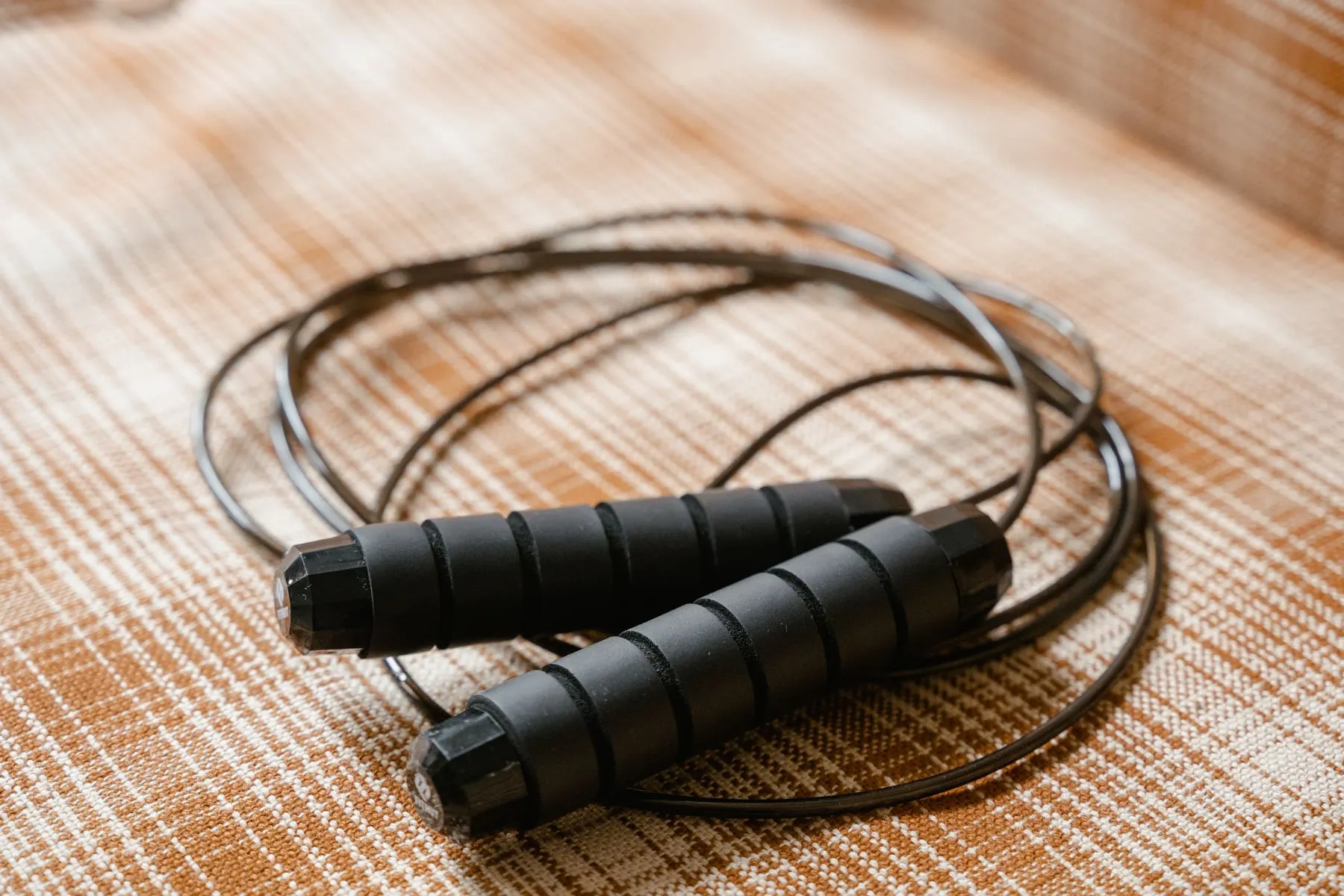
A basic adjustable rope is enough. Very light speed ropes can be difficult for a beginner to feel, while heavily weighted ropes add fatigue that distracts from timing. The handles should turn smoothly without requiring a tight grip.
Length methods vary by rope design and body proportions. As a rough setup check, stand near the middle of the rope and bring the handles upward; many beginner ropes reach somewhere around the lower chest or armpit area. Treat that as a starting check, then adjust based on whether the rope clears the head and feet without creating a huge overhead loop.
Too short a rope catches the toes even with good timing. Too long a rope slaps the floor far ahead and encourages wide arm circles. Change length gradually and record the setting once it works.
Learn the sound before continuous jumping
Hold both handles in one hand and swing the rope beside the body. Listen for the floor contact and make a small bounce at that moment. Switch hands. This separates rope rhythm from the challenge of passing it under both feet.
Next, place the rope behind the heels, turn it over once, jump once, and stop. Reset deliberately. Five successful single repetitions teach more than fifty rushed attempts with the rope tangled around the ankles.
Keep the jump smaller than you think
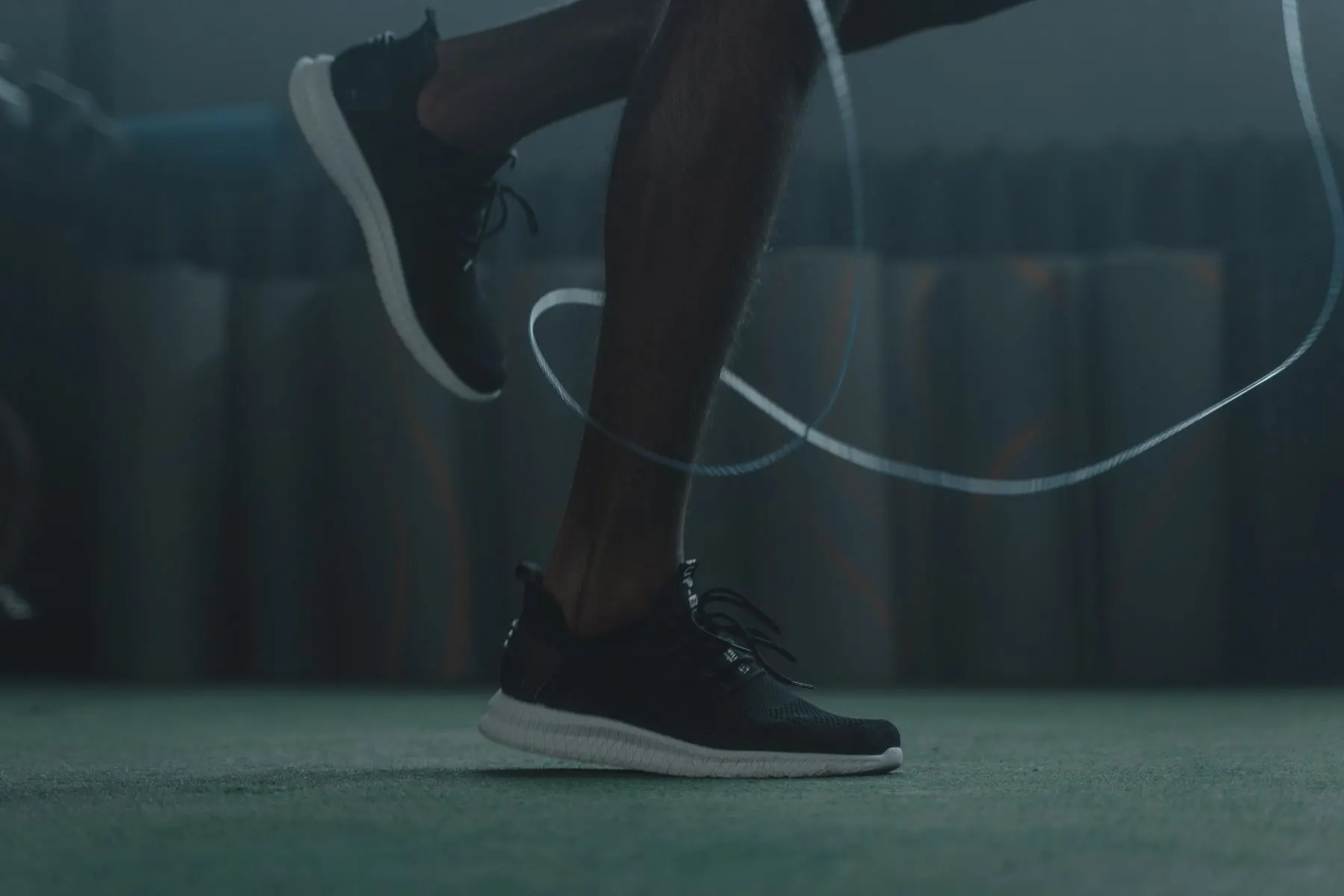
Use a tall, relaxed posture and look forward. Keep the elbows near the sides and turn mainly from the wrists instead of making large shoulder circles. Jump only high enough for the rope to pass, then land quietly through the forefoot with the knees soft.
A very high jump creates more impact and leaves extra time in the air, which often breaks the next turn. Pulling the knees upward is unnecessary for a basic bounce. Think of a small repeated rebound rather than a series of maximal jumps.
Practise sets of five to ten single bounces with a full reset. When that is consistent, try short continuous blocks of ten to twenty seconds. Rest before the calves become so tired that landings become heavy.
Progress from rhythm to foot variation
The basic two-foot bounce is enough for early practice. Later, shift weight gently from one foot to the other without turning it into a wide lateral hop. A boxer step can reduce the feeling of jumping on both legs at once, but it still requires controlled timing.
Increase only one variable at a time: a slightly longer block, a slightly faster turn, or a simple foot variation. Do not add crossovers, double-unders, and high-knee sprints in the same session because they look more athletic.
A practical beginner block might alternate twenty seconds of easy skipping with forty seconds of rest for several rounds. Someone still learning single turns can count five clean repetitions instead. Duration is adjustable; rhythm and quiet landings are the standard.
What jump rope contributes to boxing
Skipping can develop general rhythm, repeated low-level foot contacts, and the ability to stay relaxed while the hands and feet perform different jobs. It also provides a compact warm-up when space and surfaces are suitable.
It does not automatically teach boxing footwork. Ring movement includes stance, direction, distance, and balance that a rope does not reproduce. Boxing and Strength Classes shows how coordination work can sit inside a broader coached session rather than replacing technical practice.
Low-impact and no-rope alternatives
If jumping continuously is not appropriate, step over a stationary rope forward and backward, march to a timer, perform gentle alternating calf raises, or use side swings without leaving the floor. A “ghost rope” movement can practise wrist timing, although it removes the feedback of an actual rope catching.
Choose a forgiving, non-slip surface with enough overhead clearance. Concrete and hard outdoor tiles can feel harsh during repeated practice. Stop if pain develops in the foot, ankle, shin, knee, or elsewhere; do not use an article to diagnose or train through it.
Common mistakes
Looking down at the feet rounds the posture and makes rhythm harder to feel. Gripping the handles tightly fatigues the forearms. Moving the entire arms wastes energy, while jumping high makes every miss more tiring.
Another mistake is treating each catch as failure. The rope is giving immediate timing feedback. Reset, identify whether the turn was early or the jump was late, and make one smaller correction.
FAQ
Why do boxers jump rope?
It is a convenient way to practise rhythm, coordination, repeated light foot contacts, and conditioning. It supports boxing training but does not replace boxing footwork instruction.
How long should a beginner jump rope for boxing?
Begin with brief sets that preserve quiet landings and consistent turns, even if they last only ten to twenty seconds. Add time gradually instead of chasing a fixed total.
What can I do if I cannot jump rope continuously yet?
Practise side swings, single turn-and-jump repetitions, marching, or short counted sets. Continuous skipping is a progression, not an entry requirement.
The rope should make your rhythm clearer, not make the session frantic. Stay low, turn smoothly, and finish each short block before coordination disappears.
Train With BODY SMITH