Chicken Breast Alternatives for High-Protein Dieting in Korea
Chicken breast is not the only high-protein diet food. Explore practical alternatives in Korea that support fat loss, muscle gain, and consistency.
It usually goes the same way. You start a diet, load up on chicken breast, stay consistent for a week or two — and then you just can't face it anymore. The food itself is fine. The monotony isn't.
Chicken breast alternatives matter because this is one of the most common reasons diets fall apart, and it's also one of the most preventable. You don't need a perfect protein source. You need enough options that you're not relying on the same thing every day. Here's what actually works in Korea — from convenience stores to everyday restaurant meals.
The Alternatives Worth Knowing About
A few options stand out as genuinely practical for regular use:
- Eggs are the easiest swap. Boiled, pan-fried, or pre-packed from a convenience store — they're cheap, widely available, and require almost no effort. The protein per egg isn't huge, but two or three eggs at a meal adds up quickly.
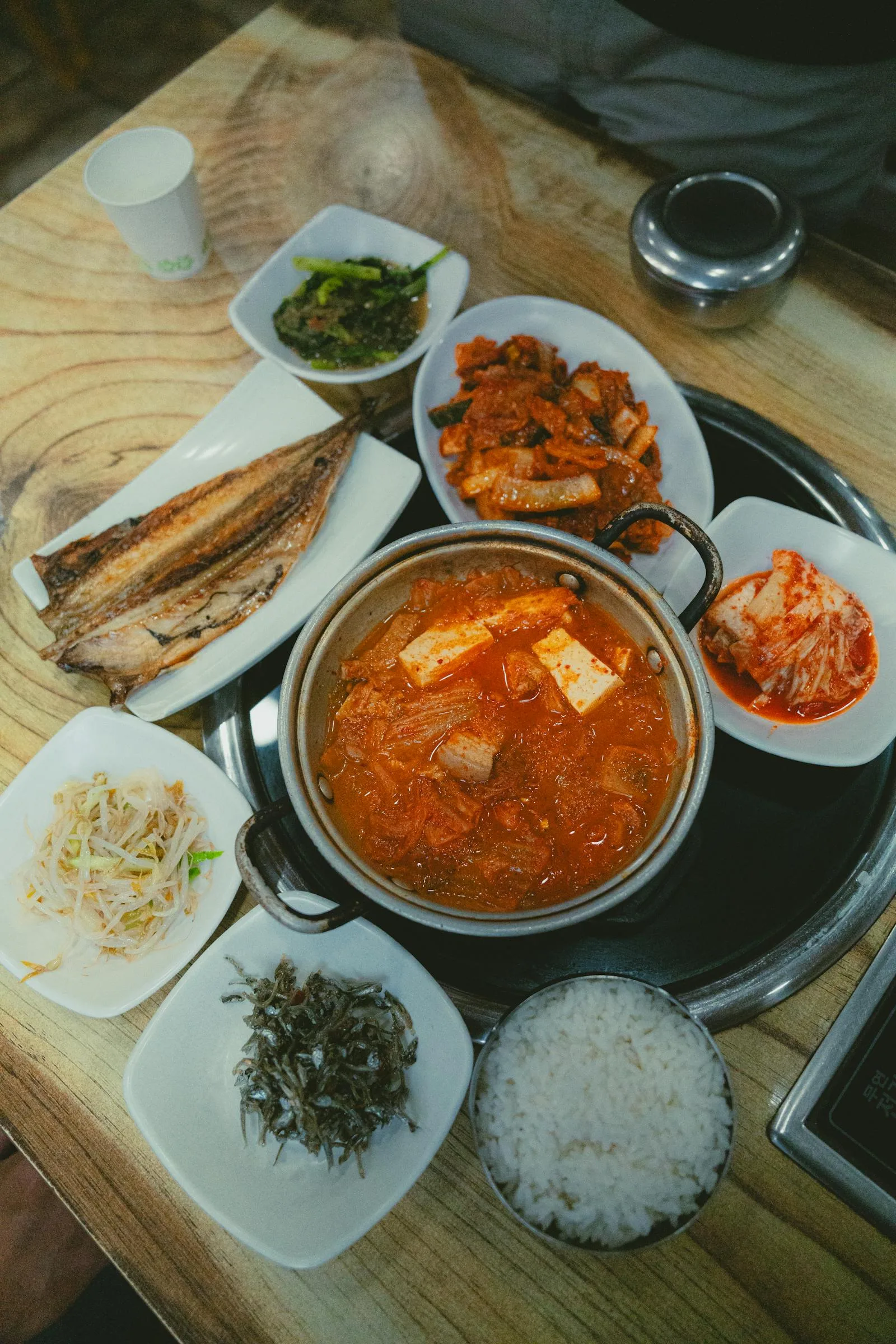
- Tofu is one of the most underused options for people eating Korean food regularly. Sundubu jjigae, dubu jorim, or just tofu alongside a regular meal — it's easy to find, fills you up, and the protein content is solid enough to make a difference across the day.
- Greek yogurt works well for mornings or as a snack, though availability varies by store. If you can find it, it's one of the more convenient grab-and-go options with a decent protein hit.
- Fish — particularly mackerel, salmon, and canned tuna — is everywhere in Korean cuisine and genuinely underrated as a protein source. A grilled mackerel set meal (고등어구이 정식) is a perfectly reasonable, balanced option that doesn't require any special planning.
- Lean pork and beef cuts are more diet-friendly than their reputation suggests. The issue with Korean BBQ isn't usually the meat — it's the volume, the alcohol alongside it, and the anju. A samgyeopsal night isn't ideal, but a meal built around leaner cuts like pork loin or beef sirloin is a different story.
What to Actually Look for When Choosing
Rather than chasing the "leanest" or "best" protein, three questions are worth asking about any option you're considering.
How much protein does it actually provide? You don't need to track grams obsessively, but a rough sense of whether a food contributes meaningfully to your daily intake — or barely registers — helps you build meals that work.
How does the fat content affect your overall calories? Salmon and certain pork cuts are higher in fat, which isn't a problem in itself but changes how much you should eat. A fatty cut once or twice a week is fine; building every meal around it is different.
Can you actually eat this regularly? This is the one that matters most. The best protein source is the one you'll eat without dreading it. Variety across the week beats the perfect food you're sick of by Thursday.
For a clearer sense of how much protein you actually need: how protein needs change by body size, training frequency, appetite, and daily routine. How Much Protein Do I Need
Finding Protein in Seoul Without Overthinking It
The practical landscape here is more helpful than people often realize.
Convenience stores (CU, GS25, 7-Eleven) have become genuinely useful for quick protein. Boiled eggs are everywhere and cheap. Protein drinks and small yogurts are stocked in most locations. Pre-packed chicken or sliced meats show up regularly. None of it is exciting, but it's consistent and requires no planning — which is exactly what matters when you're busy or tired.
Korean restaurant meals are more diet-compatible than they're often given credit for. The challenge isn't that Korean food is inherently high-calorie — it's that the rice portions are generous and the anju culture encourages eating more than you planned. A grilled fish set meal, a tofu jjigae, or a meat-based soup with controlled rice is a solid, balanced option at almost any restaurant.
Eating out socially doesn't require finding a "diet-friendly" restaurant. It requires minor adjustments: leaning toward leaner cuts when there's a choice, sharing rather than having your own portion of the heaviest dishes, and being aware of how much rice you're actually eating.
For more specific guidance on navigating restaurant meals: how to make practical restaurant choices in Korea without treating every meal like a diet test. Diet Friendly Korean Restaurant Food
Why Most People Stay Stuck on Chicken
It's rarely about not knowing alternatives exist. It's usually one of a few patterns.
Trying to find a single replacement that does everything chicken does — lean, easy, cheap, versatile. That food doesn't really exist, and searching for it keeps people stuck. A rotation of three or four options works far better than one "ideal" substitute.
Underestimating convenience. If a food requires meaningful effort to prepare, most people won't maintain it through a busy week. Options that are already ready — or nearly ready — have a real advantage.
Separating diet food from real life. A protein strategy that only works when you're eating alone at home will fall apart the first time your schedule changes. It needs to hold up during social meals, late nights, and convenience store runs.
A Simple Weekly Pattern
You don't need a detailed meal plan. A loose rotation across different contexts is enough:
- At home: eggs, tofu, simple cooked fish or meat
- On the go: convenience store eggs, yogurt, protein drinks
- Eating out: grilled fish or meat sets, tofu-based dishes, soups with lean protein
The goal is to make sure protein shows up consistently across your day — not to hit a precise number every time, but to avoid meals that are mostly carbs with protein as an afterthought.
For a broader look at building sustainable nutrition habits: simple nutrition habits that make fat loss easier to repeat across normal weeks. Fat Loss Nutrition Habits
FAQ
What's the best chicken breast alternative for high protein?
There isn't one best option — that's the point. Eggs, tofu, fish, Greek yogurt, and lean meat cuts are all solid, and rotating between them is more sustainable than replacing chicken with a single substitute.
Can tofu, eggs, or Greek yogurt actually replace chicken breast?
Yes, across a full day. None of them match chicken breast gram-for-gram in protein density, but combining two or three of them across meals easily covers the same ground — often with more variety and less meal fatigue.
What high-protein foods are easiest to find in Korea?
Convenience store eggs and yogurt for quick access. Tofu and fish in most Korean restaurant meals. Lean pork and beef cuts when you're eating BBQ or at a regular restaurant. None of these require special stores or much effort.
Chicken breast works fine — the problem is leaning on it exclusively until you can't stand it. Build a rotation of options that fit different situations, and consistency stops being a willpower problem.
Train With BODY SMITH