Diet-Friendly Korean Restaurant Food in Seoul: How to Eat Out Well
Diet-friendly Korean restaurant food in Seoul: choose BBQ, soups, rice portions, sauces, and protein while eating out without derailing your goals.
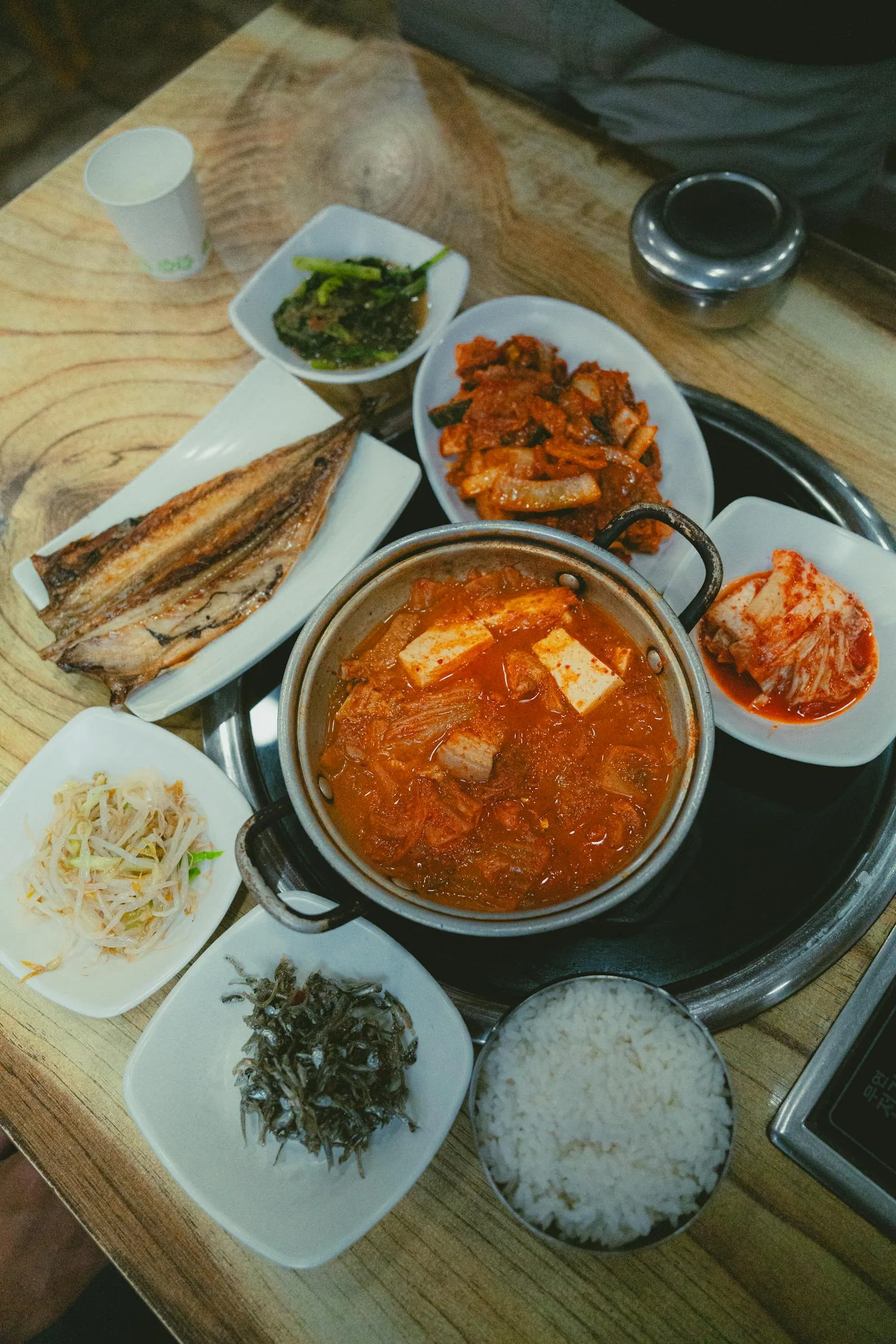
You sit down at a Korean restaurant, the table fills up with rice, banchan, shared dishes, and sauces — and the question hits: what can I actually eat here?
It's a reasonable thing to wonder, especially when nothing is labeled, portions aren't designed for individual control, and saying no to shared dishes carries its own social weight. Diet friendly Korean restaurant food is less about finding perfect meals and more about making slightly better choices within the meals you're already having.
Here's how to do that across the situations you'll actually encounter.
If your goal is to pair better restaurant choices with coached training, our personal training in Seoul page explains how BODY SMITH combines boxing, conditioning, and strength work.
By Restaurant Type
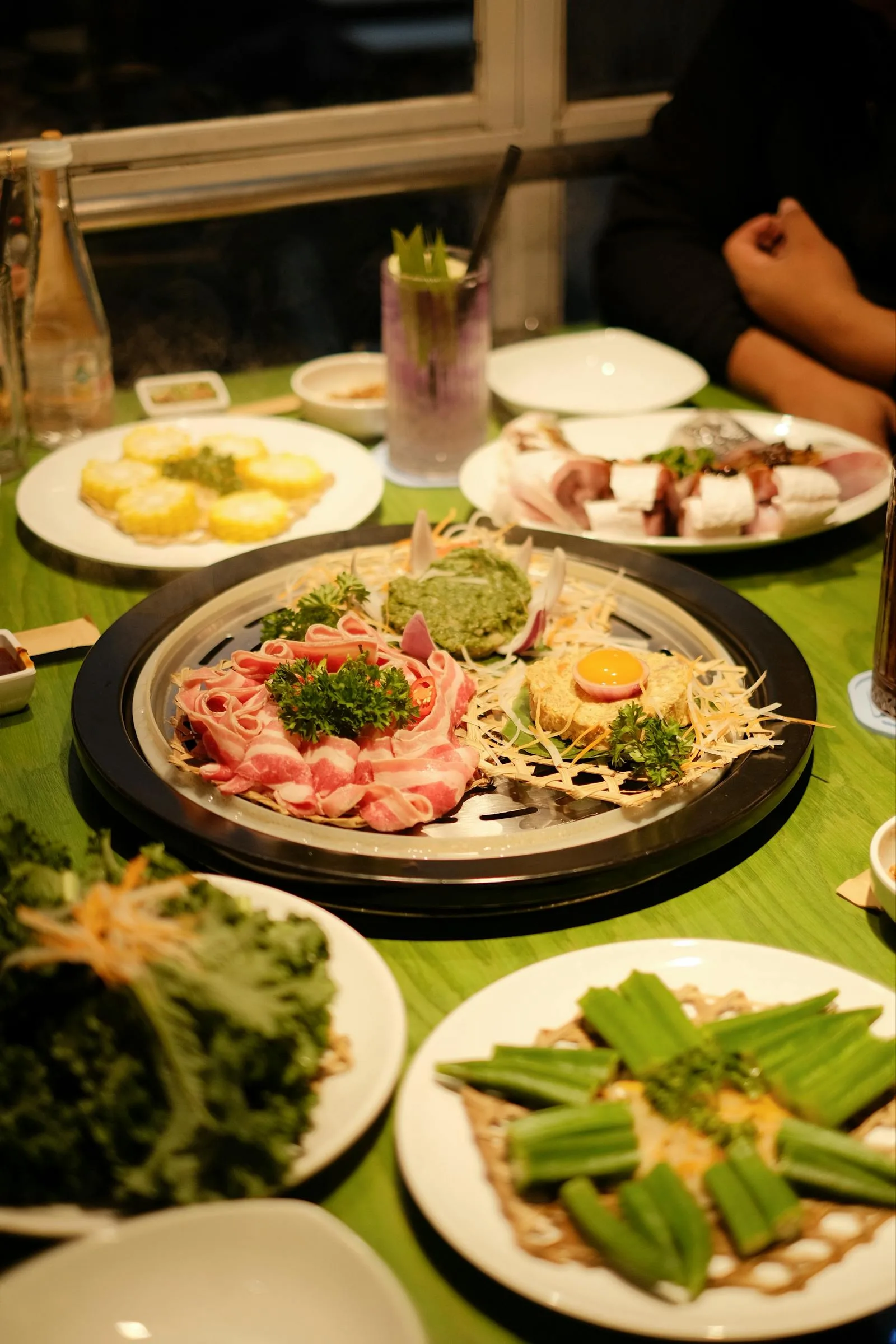
Korean BBQ
The meat itself usually isn't the problem — it's the volume, the fatty cuts dominating the grill, and the extras alongside it. A practical approach: make sure leaner cuts (beef sirloin, pork loin) make up a decent share of what's on the grill, use the vegetables and wraps to add bulk without many calories, and be honest about how much samgyeopsal you're actually eating versus how much is just there.
Soup and gukbap restaurants
These are some of the more diet-friendly setups in Korea, mostly because the structure is already reasonable — protein, broth, and vegetables. The main adjustment worth making is rice: eat less of it, or push some aside. The soup and protein are where your attention should go.
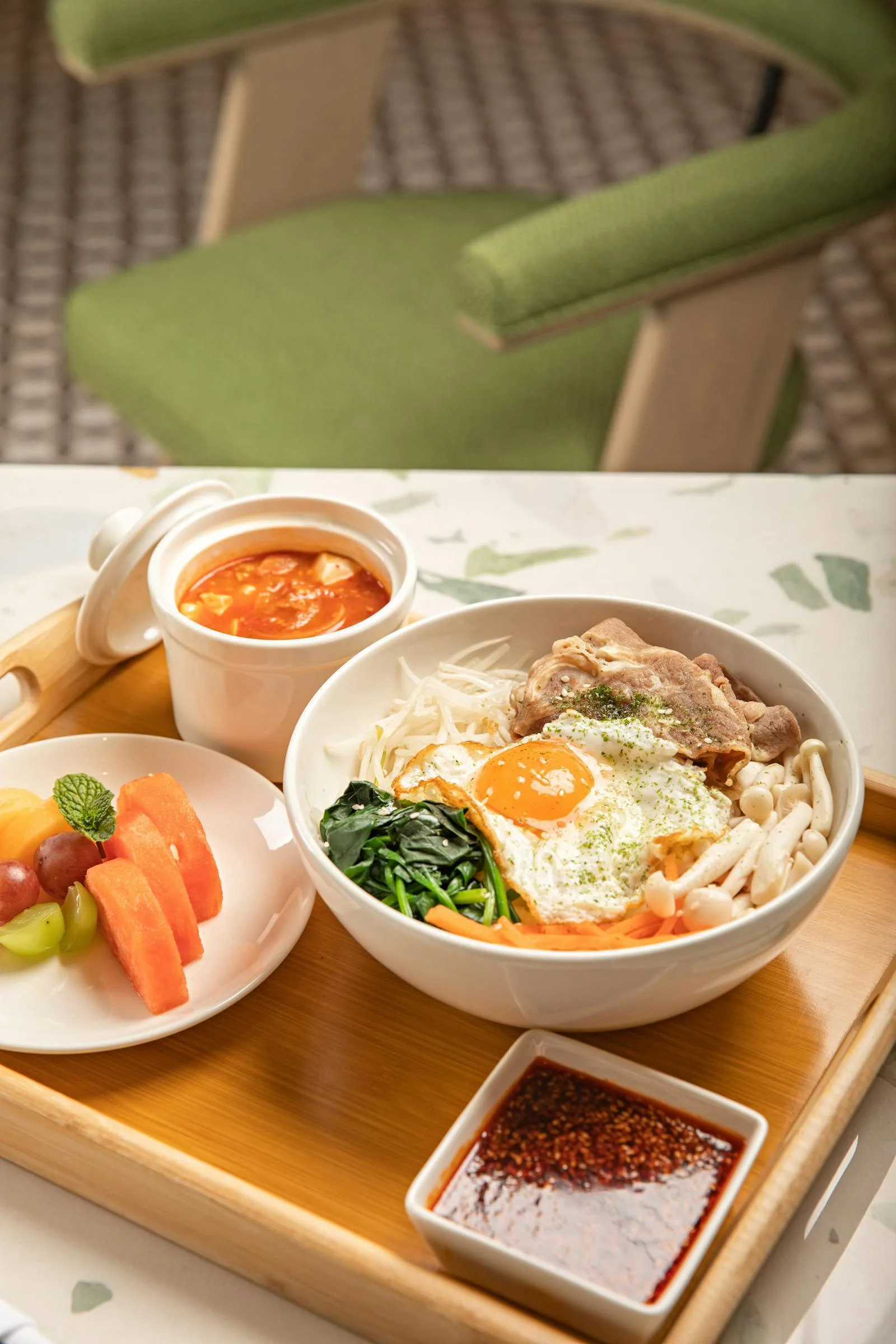
Bibimbap
Naturally well-balanced in terms of ingredients. Two things to watch: how much rice you're mixing in, and how heavy-handed the gochujang sauce is. Both add up faster than they look. Neither needs to be eliminated — just scaled back slightly.
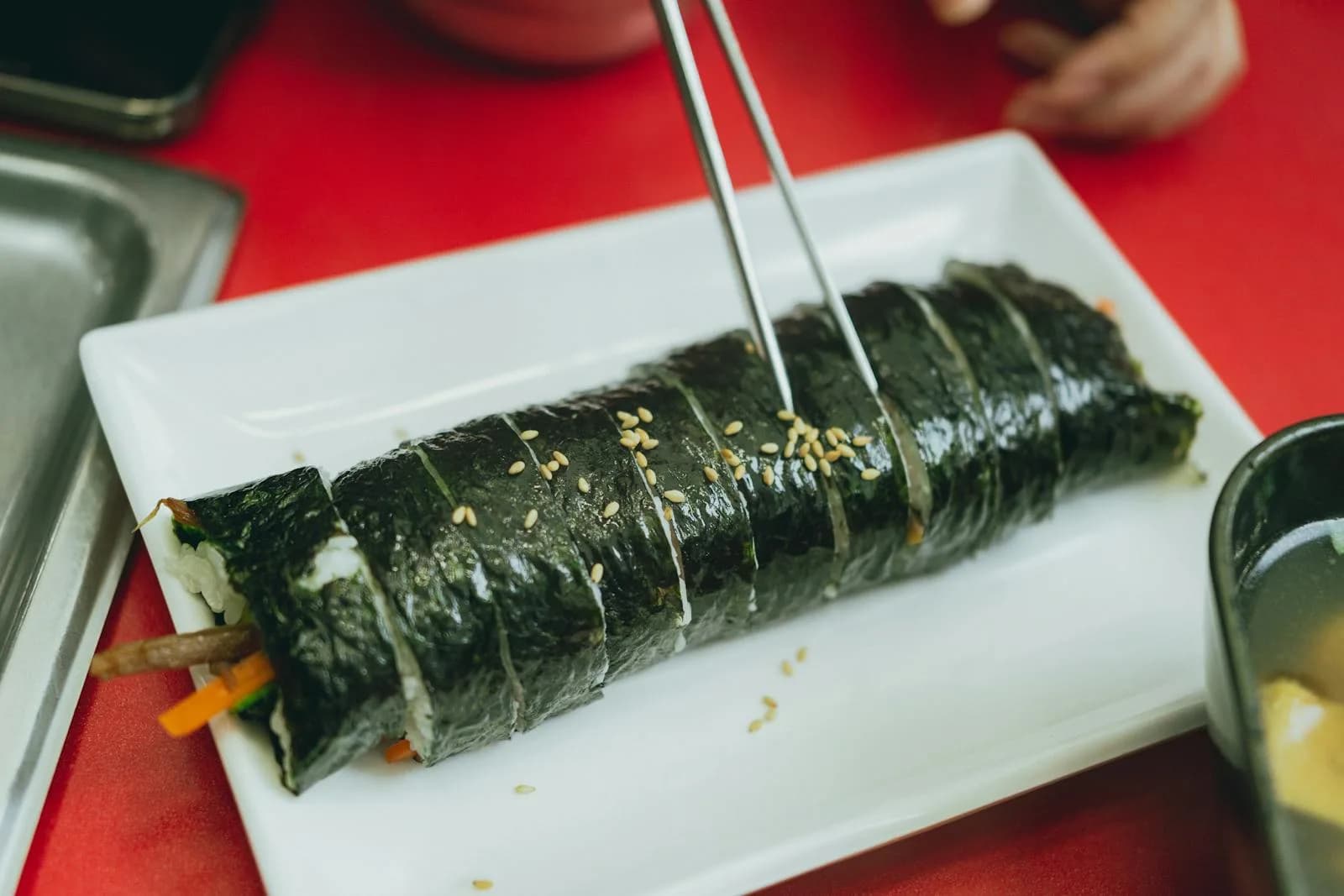
Kimbap and casual spots
Quality varies a lot here. Rolls with eggs, tuna, or lean meat are solid. Heavily processed fillings, or versions that are mostly rice with a thin strip of something, are less so. The difference is usually obvious when you look at the cross-section.
Shabu-shabu
One of the most flexible options available. You control what goes into the broth, which makes it genuinely easy to load up on protein and vegetables without the portions getting away from you.
The Three Things That Actually Determine Whether a Meal Works
Across all restaurant types, the difference between a meal that supports your goals and one that quietly derails them usually comes down to the same three factors.
Where the protein is. Meals built around a solid protein source — meat, fish, tofu, eggs — tend to be more filling and easier to manage overall. If a meal is mostly rice and banchan with a small amount of protein, it's worth thinking about how to rebalance it.
How much rice you're actually eating. Rice isn't the enemy, but it's automatic in Korean meals in a way that makes it easy to eat more than you intended. You don't need to skip it — just be deliberate about how much ends up in the bowl.
Cooking method and sauces. Grilled, steamed, and broth-based dishes are generally easier to work with than fried or heavily sauced ones. This isn't a hard rule, but it's a useful default when you're scanning a menu.
For more on balancing protein choices across different meals: chicken breast alternatives for people who want more variety while keeping protein high. Chicken Breast Alternatives
Meals That Tend to Work Well
A few Korean dishes naturally lend themselves to diet-friendly eating — not because they're "health food," but because their structure makes portion control straightforward.
Grilled fish sets (생선구이 정식) come with vegetables, soup, and a modest amount of rice. The balance is already built in, and it's one of the easiest orderings you can make at a Korean restaurant without any adjustment.
Bossam is underrated here. Boiled pork is leaner in preparation than it looks, and pairing it with cabbage wraps and vegetables makes for a genuinely balanced meal — as long as you're not treating it as a preamble to heavy drinking.
Sundubu jjigae and tofu-based dishes provide solid protein at a lower calorie density than meat-heavy options. The spicy broth also tends to slow down eating pace, which helps with portions.
Shabu-shabu, as mentioned — flexible by design, and one of the few restaurant formats where you're genuinely in control of what ends up in your bowl.
Where Things Usually Go Wrong
Most people don't struggle because Korean food is inherently difficult to navigate. They struggle because of a few recurring patterns.
Losing track of portions in shared meals. When dishes keep arriving and everyone is eating from the same plates, it's genuinely hard to monitor intake. This isn't a discipline failure — it's just how shared eating works. A loose awareness of roughly how much you're taking helps more than trying to count anything.
Assuming "healthy-looking" means low-calorie. Bibimbap, for example, looks balanced — and it is — but a generous serving with a heavy hand of sauce and a full bowl of rice can still be a significant meal. The ingredients being good doesn't automatically make the portion appropriate.
Ignoring drinks. Alcohol and sugary drinks can contribute more to a meal's caloric load than the food itself, especially across a long dinner. If you're thinking about how alcohol fits into dieting more broadly: how alcohol can fit into dieting when frequency, portions, and food choices are managed realistically. Can You Drink Alcohol While Dieting
Trying to be perfectly controlled in social settings. This usually backfires. Rigid rules tend to break under social pressure, and when they break, people write off the entire meal — or the entire week. Small, consistent adjustments hold up far better.
The Mental Model Worth Keeping
Rather than rules, one simple habit of thought tends to help: before you start eating, spend ten seconds asking three questions.
Where's the protein in this meal?
How much rice am I actually going to eat?
Am I adding anything I don't really need?
That's it. You don't need exact numbers or a tracking app. Just enough awareness to make slightly better choices than you would on autopilot — and to do that consistently across most meals, not perfectly at every single one.
For a broader look at sustainable nutrition habits: simple nutrition habits that make fat loss easier to repeat across normal weeks. Fat Loss Nutrition Habits
The Fundamentals — and Why They're Enough
Most people make nutrition more complicated than it needs to be. The habits that drive fat loss aren't elaborate. They're just the ones people have the hardest time actually repeating.
Protein at every meal. This one has an outsized impact relative to how simple it is. Protein keeps you fuller for longer, supports muscle while you're in a calorie deficit, and gives your meals a structural anchor. In a Korean food context, this looks like grilled fish or tofu in a set meal, eggs or yogurt in the morning, a chicken breast pack from the convenience store. If you finish a meal and there wasn't a clear protein source in it, that's the first thing worth fixing.
Portions before elimination. The instinct to cut things out — rice, carbs, anything that seems indulgent — usually backfires. You're left eating foods you don't enjoy, you feel deprived, and eventually you overcorrect. A more durable approach is adjusting how much you eat rather than what. Slightly less rice instead of no rice. One serving instead of two. Enough to create a consistent deficit without making every meal feel like a punishment.
Planned snacks instead of reactive ones. Unplanned snacking is where a lot of otherwise solid days fall apart — not because of one bad decision, but because hunger caught up faster than expected and the nearest option was a pastry or a sugary drink. Having a go-to snack already decided (boiled eggs, a protein drink, yogurt) and accessible during a long workday removes that moment of vulnerability entirely.
Five Things Worth Starting This Week
If the above feels like a lot, start here and add nothing else:
- Include a clear protein source in every meal.
- Reduce rice slightly rather than cutting it out.
- Decide on one or two daily snacks in advance and keep them accessible.
- Drink water before meals.
- Keep roughly the same structure on weekends as weekdays.
That combination, done consistently, will do more than any specific diet plan applied intermittently.
For more on how much protein you actually need: how much protein you need when training regularly depends on body size, goals, and how consistently you can eat across the week. Protein Intake For Training
FAQ
What Korean restaurant dishes are easiest to fit into a diet?
Grilled fish sets, shabu-shabu, sundubu jjigae, and bibimbap with adjusted portions are all solid starting points. They're not diet food — they're just meals where balance is easier to achieve without much effort.
Can I eat Korean BBQ while dieting?
Yes. The key adjustments are leaning toward less fatty cuts, using vegetables and wraps to build out the meal, and being honest about total volume rather than fixating on any single item.
What should I grab at a Korean convenience store when I'm dieting?
Boiled eggs, Greek yogurt, protein drinks, and simple meal boxes are the most reliable options. Combining two or three items gives you a reasonably balanced meal without overthinking it.
Train With BODY SMITH