Why Can't I Squat Properly? Body Proportions, Mobility, and Stance Explained
Squat problems are often about body proportions, mobility, stance, and control. Learn why one perfect squat style does not fit every body.
"Why can't I squat properly?" comes up constantly when people start strength training. You watch someone squat with a deep, upright position and try to copy it — and it feels unstable, uncomfortable, or just fundamentally wrong.
In most cases, the problem isn't that you're doing it incorrectly. It's that your body is built differently, and your squat needs to reflect that. Femur length, ankle mobility, and hip structure all shape what a well-executed squat looks like for you specifically. Once you understand those variables, the question shifts from "why can't I squat like that?" to "what does a good squat look like for me?" — and that's a much more answerable question.
What a Squat Is Actually Trying to Do
At its core, a squat is a balance problem. Your body is trying to keep your center of mass over your base of support — roughly over the middle of your foot — while moving through a range of motion that requires significant coordination across multiple joints.
The angles your body takes to accomplish this — how much your torso leans, how far your hips travel back, how your knees track — are not arbitrary. They're your body's solution to the balance equation given your specific proportions.
Longer femurs mean your hips naturally travel further back during a squat. To stay balanced over mid-foot, your torso leans forward more. This isn't a mistake or a compensation to fix — it's physics. Someone with shorter femurs or better ankle mobility can stay more upright with the same effort, but that doesn't make their squat better. It just reflects a different starting point.
Mobility adds another layer. Limited ankle mobility restricts how far the knees can travel forward, which pushes the hips back and increases forward torso lean. Limited hip mobility can affect depth or change how the knees track. Both are addressable over time, but neither is fixed by simply trying harder to replicate a visual you've seen.
The Variables That Shape Your Squat
Femur length is often the biggest structural factor. Longer femurs create a more hip-dominant movement pattern with greater forward lean. Shorter femurs allow a more quad-dominant, upright position. Neither is correct or incorrect — they're simply different geometries that produce different-looking squats.
Ankle mobility determines how far the knee can travel forward over the foot. When ankle mobility is limited, the heel wants to lift, the knee stops early, and the torso compensates forward. Elevating the heels slightly — with weightlifting shoes or a small plate — can immediately reveal what your squat looks like without that restriction, which is useful both for training and for understanding what you're working with.
Stance width and foot angle are adjustable variables that most beginners overlook. A narrower stance is more knee-dominant and requires more ankle mobility. A wider stance is more hip-dominant and often feels more stable for people with certain hip structures. Small changes in foot angle — toes slightly more out, or more forward — can meaningfully affect how the hips move through the squat. Testing these adjustments with light weight is often more effective than any amount of stretching.
The Mistakes That Keep the Problem Going
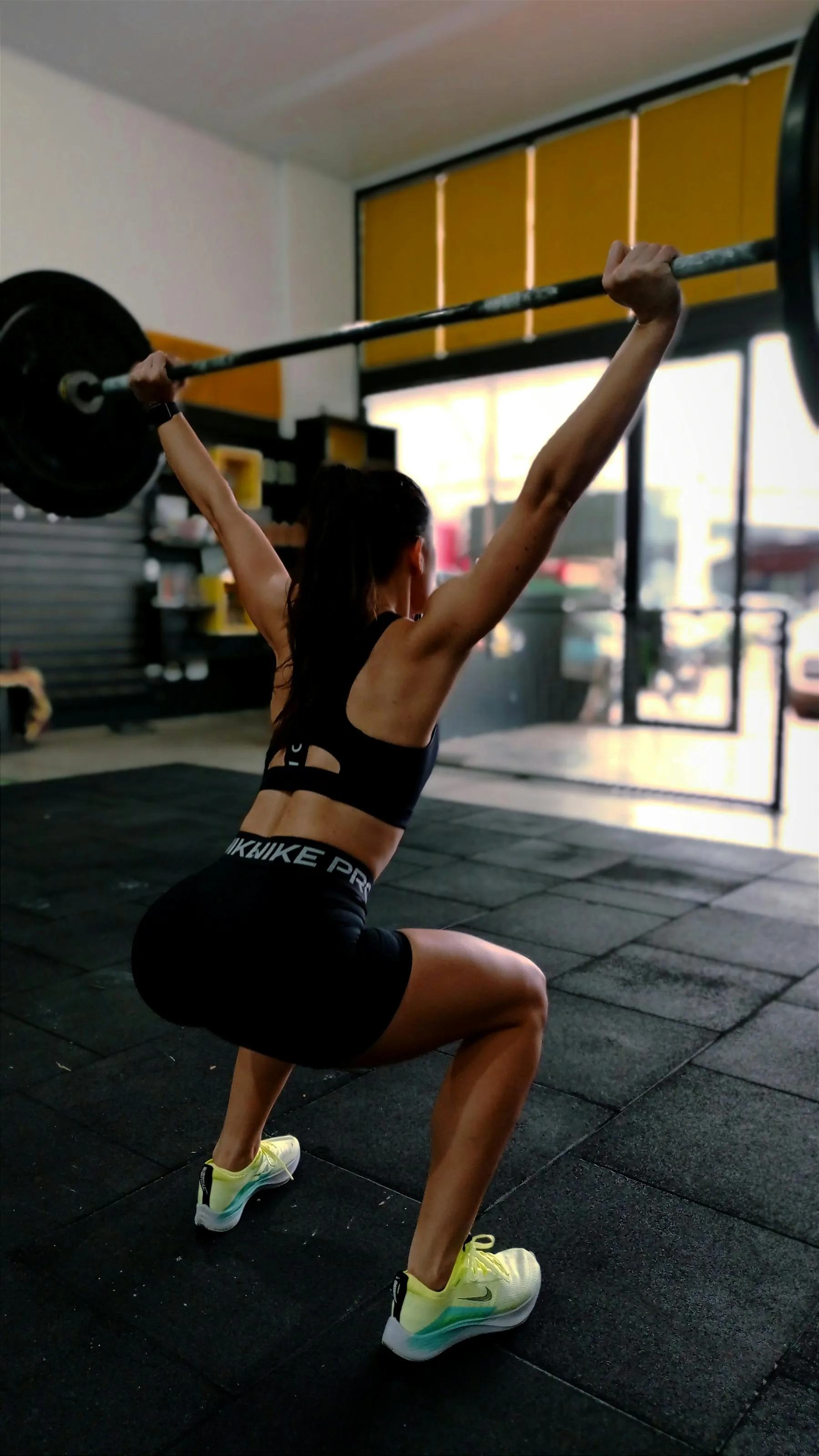
Forcing an upright torso. This is the most common one. The upright squat looks clean in photos and videos, so people try to replicate it regardless of their proportions. For someone with longer femurs, this creates instability, shifts load onto the knees, and often causes the lower back to take on force it shouldn't. Allowing a natural forward lean — as long as you're balanced and controlled — is not a flaw.
Ignoring ankle limitations. If ankle mobility is restricting depth, forcing the squat anyway usually means heels lifting, knees caving, or posture collapsing. The short-term fix is heel elevation. The longer-term work is systematic ankle mobility over weeks — not hours of stretching the night before training.
Using a stance that doesn't match your hips. Copying someone else's exact foot width and angle without testing it on your own structure often produces discomfort, poor depth, and instability. Small adjustments in width and toe angle can make the movement feel dramatically different. It's worth spending time on this before adding load.
Treating every problem as a mobility issue. Sometimes the squat feels off not because of tightness but because of unfamiliarity — the movement pattern hasn't been practiced enough to feel natural yet. Spending all available time stretching without actually practicing the squat tends to produce limited improvement.
A Practical Way to Work Through It
If the squat feels consistently off, these checks tend to resolve most issues.
Start with balance: are you staying over mid-foot throughout the movement, and do you feel stable at the bottom? If not, that's the first thing to address before anything else. Then adjust stance — try slightly wider, slightly narrower, and small changes in toe angle — and notice what makes the movement feel smoother without forcing it.
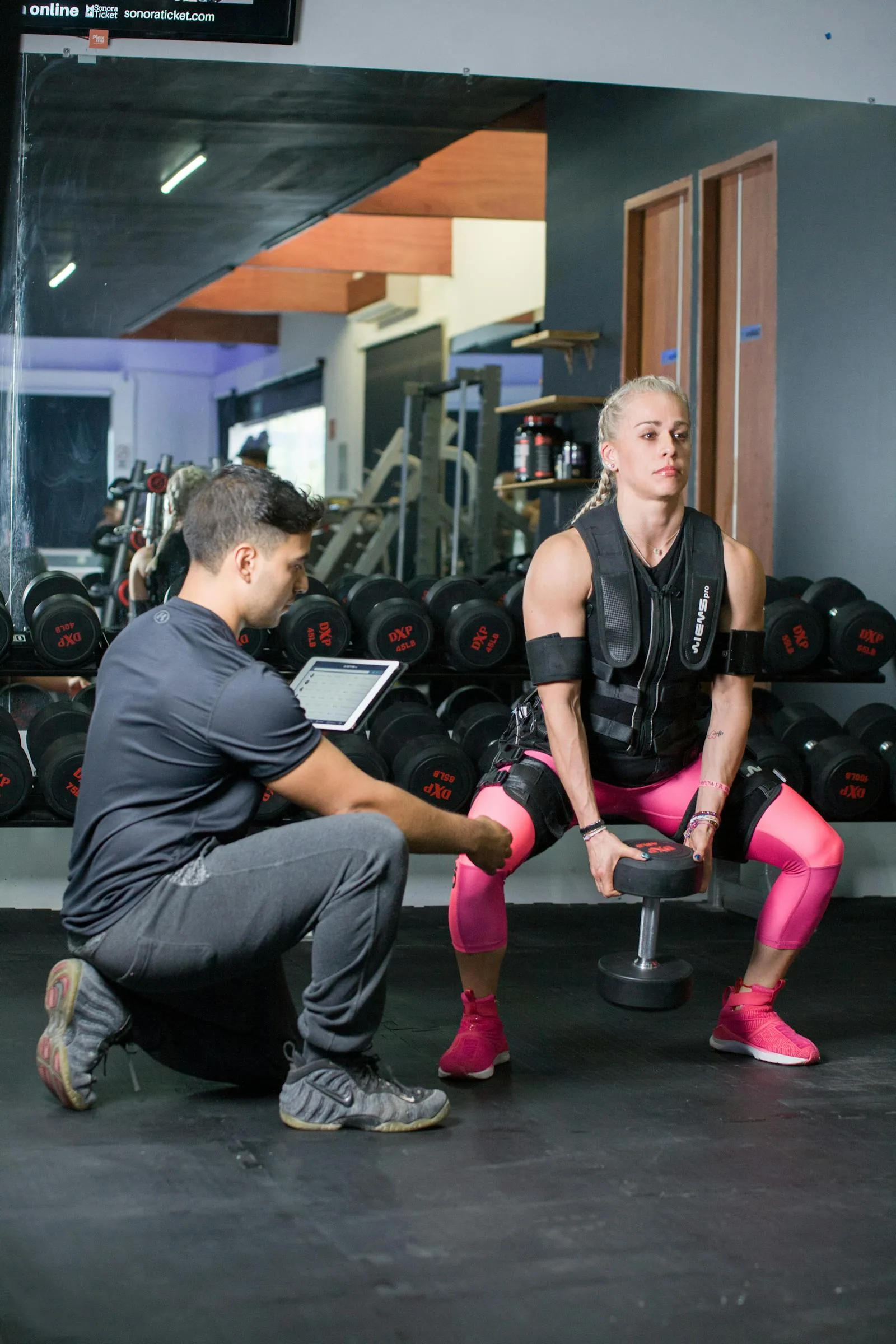
Use simpler variations while you're figuring this out. A goblet squat — holding a weight at chest height — naturally helps you find an upright position and understand where your balance point is. A heel-elevated squat reduces ankle restriction and lets you practice depth without compensation. Both are tools for learning, not substitutes for the full squat.
Reduce load whenever you're making adjustments. Lighter weight lets you explore the movement without your body locking into the compensations it uses to survive heavier lifting.
If hinge movements feel confusing too, choosing the right deadlift variation follows the same body-specific logic.
And if the adjustments aren't obvious, external feedback — a coach watching your movement — tends to resolve in one session what self-diagnosis takes weeks to figure out. For more individualized feedback on squat mechanics: Seoul Personal Training
Reframing the Question
The reason "why can't I squat properly?" is hard to answer is that it assumes there's a fixed correct squat you should be able to do. There isn't.
A squat that works for your body is one where you stay balanced over mid-foot, move with control through a comfortable range, and can progressively build strength over time without pain or persistent discomfort. What that looks like will be shaped by your femur length, ankle mobility, and hip structure — not by a video you watched.
A Simple Squat Self-Check
- Try a slightly wider or narrower stance and note whether balance improves.
- Use a small heel lift to see whether ankle range is the main limitation.
- Reduce load and depth until you can keep pressure through the whole foot.
- Film one controlled set from the side and front instead of judging by feeling alone.
FAQ
Why do I lean forward when I squat?
Forward lean is most often a result of femur length — longer femurs require more hip travel, which produces more torso lean to stay balanced. Limited ankle mobility can also contribute. A moderate forward lean is normal and correct for many people, as long as the movement stays controlled and balanced.
Does femur length really change squat form that much?
Yes, significantly. Longer femurs typically produce more hip-dominant mechanics with greater forward lean. Shorter femurs allow a more upright position. These are structural differences, not errors in technique.
How do I find the right squat stance for my body?
Start with a comfortable position and make small, deliberate adjustments to width and foot angle. Look for the combination where you can move smoothly, stay balanced, and reach a reasonable depth without forcing it. Testing variations — goblet squat, heel-elevated squat — tends to be more useful than trying to copy a fixed stance.
Train With BODY SMITH