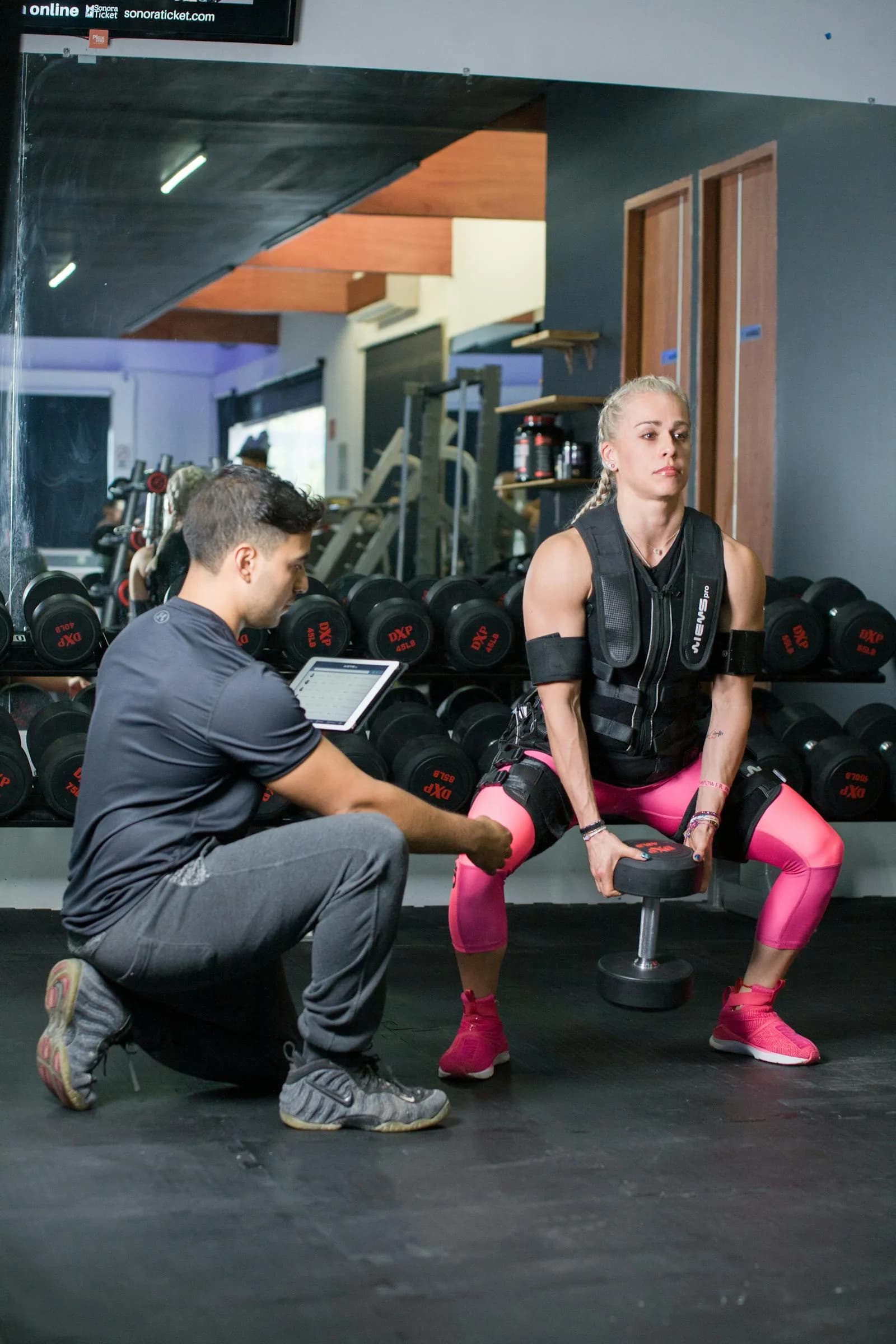
How to increase your squat, bench, and deadlift with cluster sets
Cluster sets can help you practice heavy lifts with better speed and form. Learn how they work for squat, bench, deadlift, and strength progress.
A question coaches hear often goes something like this: "I'm already lifting heavy, so why are my numbers not moving?" In many cases, the issue is not the weight itself, but how that weight is organized within a set. This is where cluster sets for strength come in.
Rather than grinding through long, fatiguing sets, cluster sets break the work into smaller segments with brief intra-set rest periods. The result is better bar speed, cleaner technique, and more consistent reps under heavy loads. When applied correctly, this can support long-term strength development without replacing the fundamentals of progressive overload.
The short answer
Cluster sets involve inserting short rest periods between reps within a single set. Instead of performing five continuous reps, you might do two reps, rest 15-20 seconds, perform two more, rest again, and finish with one.
This small adjustment often allows you to use heavier loads or maintain more consistent technique compared to traditional straight sets. For many lifters aiming to increase squat, bench, and deadlift performance, this makes cluster sets a practical addition to a strength-focused program.
That said, cluster sets are not a substitute for progressive overload. They are a tool to support it, not replace it.
The training principle behind it
Cluster sets work by managing fatigue more precisely within a set. As reps accumulate, fatigue affects bar speed, coordination, and positional stability. Short intra-set rest periods allow partial recovery of several key systems:
- ATP-PC (phosphocreatine) system: your primary source of immediate power
- Neural drive: your ability to recruit muscle fibers efficiently
- Movement quality: especially under heavy, near-maximal loads
The practical result is that each rep more closely resembles a "fresh" rep. For compound lifts like the squat, bench press, and deadlift, this matters because technique breakdown is often the main limiting factor, not just muscular fatigue.
A traditional set of five heavy squats often turns into slower, less controlled reps toward the end. In a cluster format such as 2+2+1, each rep tends to remain more consistent. This is one reason cluster sets are commonly used in powerlifting strength development and heavy technique work.
What changes by body type, goal, or training level
Training level
Beginners are usually better served by simple, consistent straight sets. Their primary focus should be learning technique and building a base level of strength. Adding cluster sets too early can introduce unnecessary complexity.
Intermediate and advanced lifters with stable technique often benefit more. At this stage, cluster sets can help maintain higher intensity without sacrificing movement quality.
Fatigue tolerance and work capacity
Lifters who fatigue quickly may find cluster sets particularly useful, as they reduce continuous strain. Those with higher endurance may not need them as often, since they can maintain performance across longer sets.
Goal alignment
- For maximal strength: cluster sets can support heavy load management.
- For hypertrophy: traditional sets may be more efficient due to longer time under tension.
- For mixed goals: cluster sets can be applied selectively to main compound lifts.
In a city like Seoul, where many people train after long workdays or commutes, managing fatigue efficiently can make a noticeable difference in consistency.
Common mistakes and tradeoffs
Applying them before technique is stable
Cluster sets do not fix poor movement patterns. They simply create more space between reps. If your squat or deadlift technique is inconsistent, focus on improving that first.
Treating them as a shortcut
Cluster sets do not remove the need for progressive overload. Load, volume, and frequency still need to increase over time.
Poor rest interval calibration
- Under 10 seconds: too short to provide meaningful recovery.
- Over 30-40 seconds: turns the set into multiple separate mini-sets.
Overusing them
Cluster sets are best reserved for main compound lifts. Using them across an entire session can increase training time without proportional benefit.
Tradeoff: Cluster sets typically reduce fatigue within a set but increase total session time. If your schedule is tight, they need to be used selectively.
How to apply this in training
A practical starting point is to use cluster sets for strength on one main lift per session.
Squat example
- 4 sets of 2+2+1 at 80-85% of 1RM
- 15-20 seconds rest between clusters
- 2-3 minutes rest between full sets
Bench press example
- 5 sets of 3+3 at a moderately heavy load
- Focus on consistent bar path and pressing speed
Deadlift example
- 4 sets of 1+1+1+1
- 15-20 seconds rest between reps
- Reset position and tension before each pull
Quality checks
- Bar speed should remain relatively consistent.
- Technique in the last cluster should match the first.
- If form degrades, reduce the load before increasing volume.
Warm up thoroughly before starting cluster work. These are still heavy loads. Because cluster sets allow higher intensities, they also place real demands on recovery. Pay attention to sleep, total weekly volume, and overall fatigue.
If you are unsure how to structure this within a full program, working with a coach can help you apply these methods more effectively. A structured approach like Seoul Personal Training can provide clearer feedback and progression without guesswork.
Coach's takeaway
Cluster sets are a practical way to manage fatigue and maintain technique under heavy loads. For intermediate and advanced lifters, they can support strength progression by improving the quality of each rep.
- They work best when your movement patterns are already stable.
- They are most useful with genuinely heavy loads, around 78%+ of 1RM.
- They should be used selectively, not as a default for every exercise.
Used appropriately, cluster sets can help bridge the gap between your current strength level and your next milestone.
For further reading, see: How to build muscle mass without overcomplicating it, and How should I deadlift? Choosing the right deadlift variation for your body.
FAQ
What are cluster sets?
A cluster set is a training method where a set is divided into smaller rep groupings separated by short rest periods, typically 10-30 seconds. This helps reduce fatigue within the set and maintain higher-quality reps.
Are cluster sets good for increasing strength?
For many intermediate and advanced lifters, yes. By preserving bar speed and movement quality across heavy reps, cluster sets can support strength development when combined with consistent programming and progressive overload.
Who should avoid cluster sets?
Beginners should generally avoid them. Early training is better spent building reliable technique and consistent strength. Cluster sets are more appropriate once movement patterns are stable.
Train With BODY SMITH