Why Boxing Is One of the Most Complete Workouts — and Why Strength Training Still Matters
Boxing is a complete workout because it trains skill, conditioning, coordination, and confidence. Learn why strength training still matters too.

After a few weeks of boxing, a question tends to surface: is this enough, or do I need to lift weights too? It's a reasonable thing to wonder. A boxing session feels complete — you're moving constantly, sweating heavily, leaving the gym genuinely tired. The feedback is immediate and convincing.
If you are wondering why boxing is a good workout, that feeling is part of the answer. Boxing challenges more systems simultaneously than most training methods. But over time, specific gaps tend to appear — particularly around strength, structural balance, and the ability to track long-term progression. Understanding both sides of this doesn't mean doing more. It means training with a clearer picture of what each approach actually provides.
What's Actually Happening in a Boxing Session
The reason boxing feels so complete is that it's genuinely demanding across multiple dimensions at once — not just physically, but neurologically.
The energy demand is continuous but varied. Light footwork and positioning alternate with explosive combinations, which means the body is repeatedly accelerating and recovering rather than sustaining a single steady effort. This combination of aerobic and anaerobic output is part of why sessions feel engaging rather than grinding, and why the fitness adaptation is broader than most steady-state cardio.
The coordination requirement is equally significant. Boxing isn't just fitness — it's timing. Hands and feet moving together, adjusting distance, reacting to targets or cues. That's a skill being trained alongside the physical output, and it develops gradually rather than plateauing quickly. It's one reason boxing tends to hold attention in a way that repetitive cardio doesn't, which matters for long-term consistency.
The core works differently in boxing than in most other contexts. A punch doesn't start at the shoulder — it starts from the ground, travels through the hips, and is transferred and stabilized through the trunk before it reaches the hands. The core's job is to link those segments efficiently, control rotation, and manage deceleration. That's functional core development built into the movement pattern, not added on top of it.
Where the Gaps Show Up Over Time
The limitations of boxing-only training tend to become visible gradually, not immediately.
The most significant is load. Boxing movements are driven by bodyweight and speed rather than external resistance. That's effective for conditioning and coordination, but it provides limited stimulus for muscle growth and doesn't progressively challenge the body in the way that external load does. Over months of training, someone doing boxing exclusively may notice their conditioning improving while their strength and muscle mass stay flat or decline slightly — particularly if they're also managing their calorie intake.
Movement pattern imbalance is a related issue. Boxing emphasizes rotation, forward and backward movement, and upper body striking. It doesn't systematically develop pulling strength, lower-body strength under load, or structural balance across joints. These aren't dramatic deficiencies after a few weeks, but they accumulate over time in ways that affect both performance and injury resilience.
And intensity without structure eventually plateaus. Feeling exhausted after a session is real feedback, but it doesn't automatically mean the body is adapting in the direction you want. Without progressive overload — measurable increases in resistance or performance over time — it's possible to sustain high effort indefinitely while strength and muscle development stall.
What Strength Training Actually Adds
Strength training addresses the specific gaps that boxing leaves open — not by replacing boxing, but by providing what it can't.
External load creates mechanical tension: a controlled, measurable resistance that signals the body to maintain and build muscle tissue. This is something bodyweight and speed-based training doesn't fully replicate. It's also trackable in a way that boxing isn't — more weight, more reps, better control are concrete markers of progress that compound clearly over weeks and months.
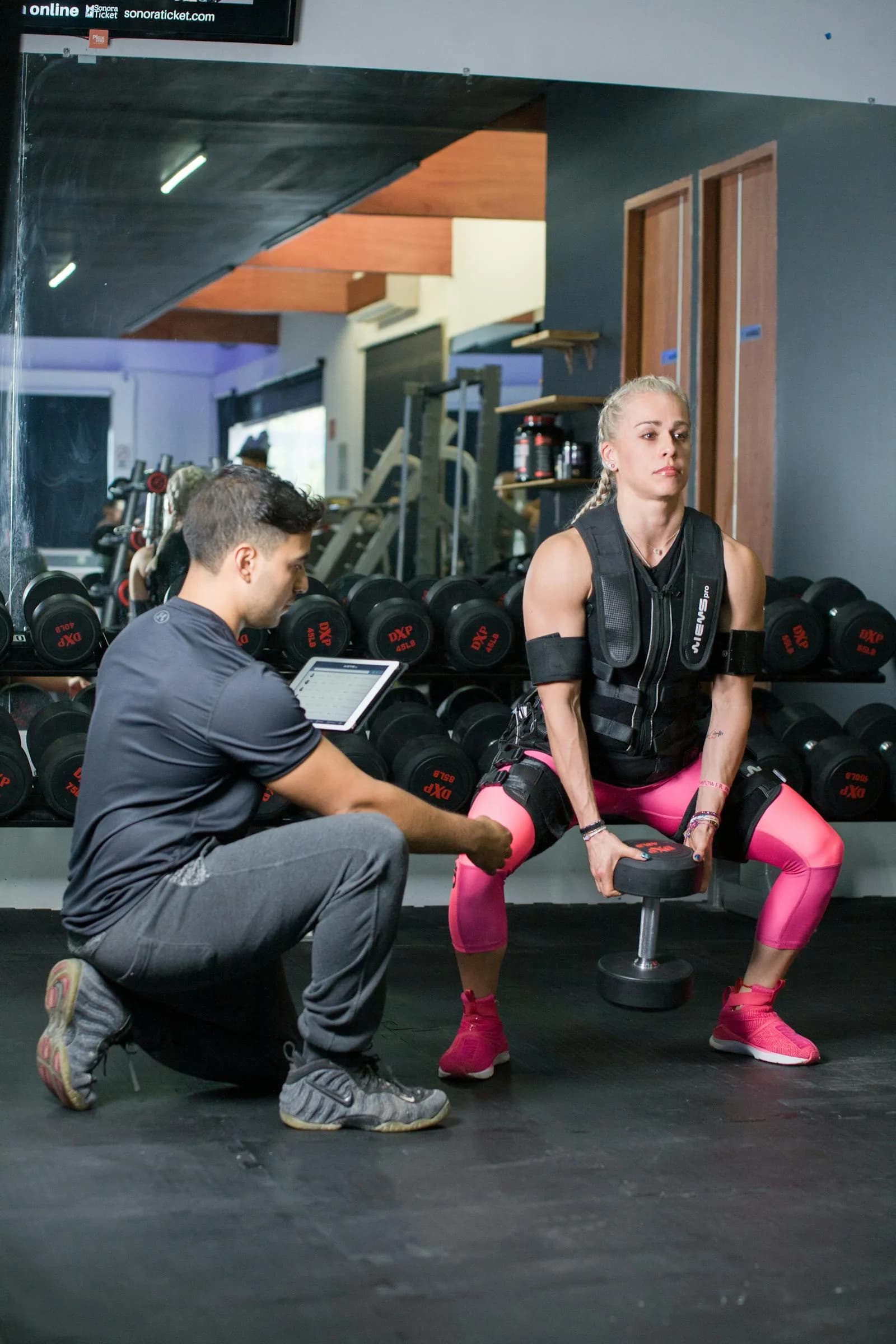
Movements like squats, rows, and pressing exercises develop the body's capacity to handle force in positions that boxing doesn't reach. Lower-body strength under load, horizontal and vertical pulling, structural balance across the shoulder joint — these aren't trained by hitting pads, and they matter for long-term durability and performance in everything else you do.
The combination — boxing for conditioning, coordination, and engagement; strength training for progressive development and structural balance — tends to produce more complete results than either alone, and tends to be more sustainable because each supports the other.
This integrated approach is what the format at: Classes is built around.

How to Structure Both Without Overcomplicating It
In a Seoul week with unpredictable schedules, the simplest structure that actually holds is usually the right one.
Two boxing sessions and one to two strength sessions per week gives you both conditioning and structural development without either crowding out the other. Combined sessions — boxing and strength work within the same training block — are often more practical, because they eliminate the coordination required to fit separate workouts into an already full week. One visit covers both.
For beginners, the combined format has another advantage: you're not having to plan two separate programs or figure out how they relate to each other. The structure is already there. You follow it, learn the movements, and build both skills simultaneously.
For more focused individual guidance on both: Seoul Personal Training
The Misunderstandings Worth Clearing Up
"Boxing covers everything." For conditioning, coordination, and general fitness — yes, it covers a lot. For strength progression and muscle retention over time — it doesn't, and that gap tends to widen the longer someone trains exclusively.
"Lifting weights will make me bulky." For most people doing a few strength sessions per week while managing their diet, the result is better structural balance and muscle tone, not significant size gain. Building noticeable muscle mass requires sustained effort, sufficient calorie surplus, and time — conditions that don't apply to someone adding two strength sessions to an otherwise active week.
"More intensity equals better results." High-intensity boxing sessions produce real adaptation, but adaptation requires more than intensity — it requires progression. A mix of skill work, conditioning, and measurable strength training over time produces more consistent improvement than maximum effort repeated indefinitely.

The Honest Summary
Boxing is genuinely one of the most complete training methods available for conditioning and athletic development. The feeling of a good session isn't misleading — it reflects real work across real systems.
But completeness of experience isn't the same as completeness of development. The body also needs progressive resistance, structural balance, and measurable progression to develop fully over time — and those are things boxing isn't designed to provide.
For most people, the most effective and sustainable approach is using boxing for what it does best, and using structured strength training for what it adds. Neither has to compromise the other, and combined, they tend to produce results that either alone doesn't.
To see how this works in practice at BODY SMITH: Booking
FAQ
Is boxing good for weight loss and conditioning?
Yes, for most people. The combination of continuous movement and interval-style intensity supports both conditioning and energy expenditure. Results still depend on nutrition, consistency, and overall training balance — but boxing is a strong foundation for both.
Can boxing build muscle, or do I need to lift weights too?
Boxing can help maintain some muscle, particularly early in training. Over time, it doesn't provide enough progressive resistance to build or fully preserve muscle — especially during a calorie deficit. Adding strength training closes that gap.
Why combine boxing and strength training rather than just doing one?
Because each covers what the other doesn't. Boxing develops conditioning, coordination, and functional fitness. Strength training provides progressive overload, structural balance, and measurable development. Together they produce more complete results than either does alone.