Sweating and Workout Effectiveness: What Actually Matters
Sweating feels intense, but it is not the best measure of workout quality. Learn what effort, progression, recovery, and consistency show instead.
Finish a workout drenched in sweat and it is hard not to feel like the session worked. The feedback is immediate: heavy breathing, wet clothes, and the feeling that you pushed yourself.
But sweating and workout effectiveness are different questions. This article is not mainly about fat loss. It is about how to judge whether a training session actually created a useful stimulus: better conditioning, stronger movement, improved skill, or progress you can repeat next week.
Why the Belief Makes Sense — and Where It Falls Apart
The sweat-equals-effort logic is understandable. Hard sessions often raise body temperature, heart rate, and breathing. Sweat appears at the same time, so it feels like proof that the workout was effective.
The problem is that sweat is a body response, not a training outcome. It tells you that your body is regulating heat. It does not tell you whether your technique improved, whether your conditioning is progressing, whether your strength work was heavy enough, or whether the session fits your recovery.
What Sweat Actually Depends On
Sweat volume is driven by conditions around the workout as much as the workout itself.
Temperature, humidity, ventilation, clothing, hydration, and individual physiology all matter. A humid Seoul summer class can feel dramatically harder than the same session in a cool room. That does not automatically mean the program was better. It means the environment changed the body's cooling demand.
This is why sweat should be treated as context, not the scoreboard.
What Effective Training Actually Depends On
Effective training depends on the intended adaptation.
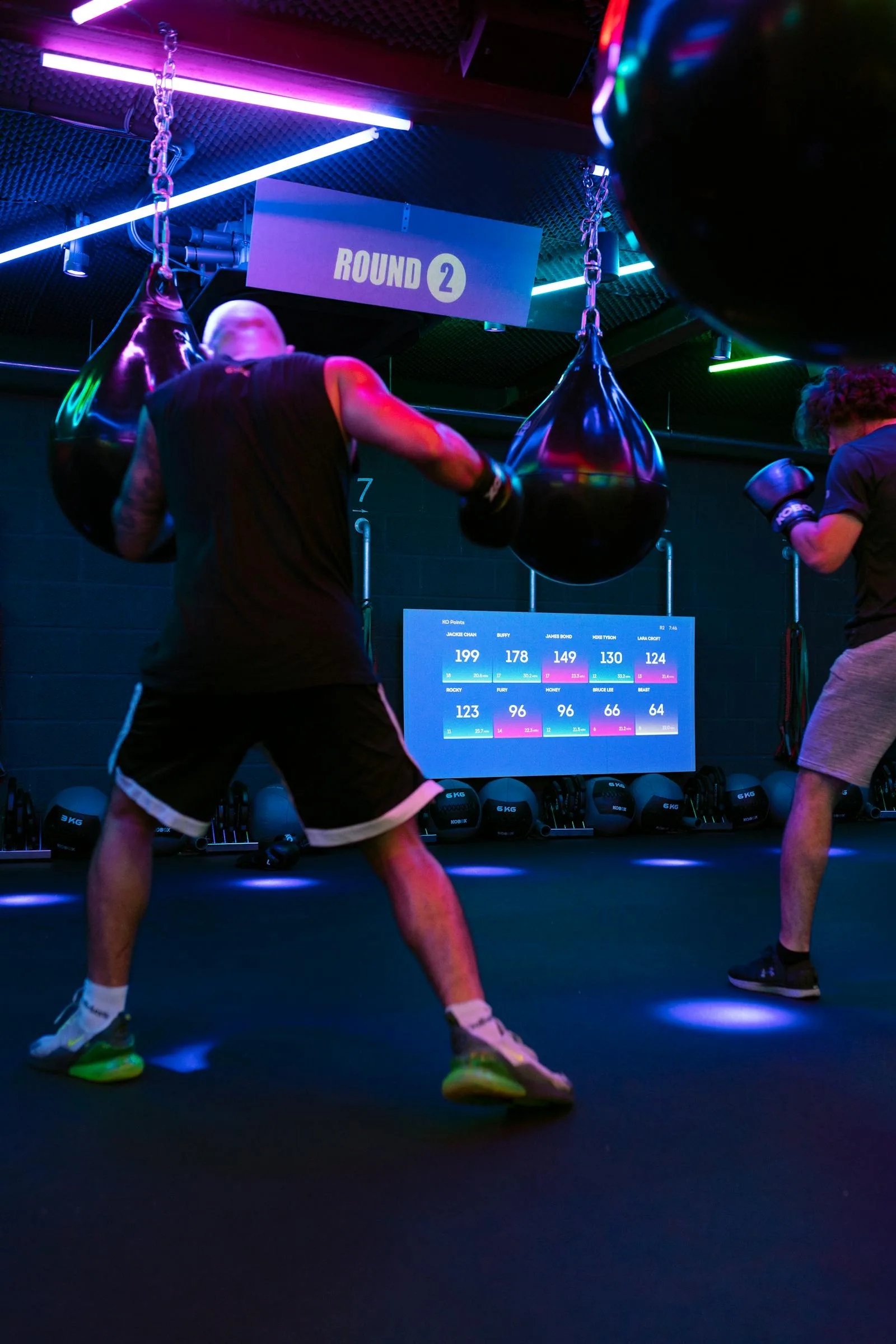
For strength, the question is whether the load, reps, and technique created a clear strength stimulus. For conditioning, the question is whether the session challenged your aerobic or interval capacity at the right level. For boxing, the question is also skill: timing, footwork, distance, breathing, and clean execution under fatigue.
A heavy set of squats in a cool gym might produce little sweat and still be highly effective. A technical boxing session might not destroy you, but it can still improve coordination and control. A session that leaves you soaked but has no progression, no skill focus, and poor recovery may feel intense without moving the plan forward.
What to Pay Attention to Instead
If sweat isn't a reliable signal, what is?
Performance over time is the most direct indicator. Are you lifting slightly more than last month? Completing more reps with the same weight? Moving with better control and less effort? These are signs that your body is adapting.
Appropriate effort matters — challenging enough to create a stimulus, but not so exhausting that recovery becomes an issue. If every session leaves you depleted for days, the intensity is probably working against consistency.
Consistency itself is arguably the most important metric. Showing up regularly across weeks and months produces results that occasional intense sessions can't replicate.
Recovery closes the loop — if you can come back and train again without excessive fatigue, the session was probably calibrated correctly.
For context on how different training types fit into a broader routine: the difference between choosing exercise by calorie burn and choosing exercise you can repeat. Boxing Vs Running For Fat Loss
How Chasing Sweat Can Work Against You
When sweat becomes the goal, a few counterproductive patterns tend to follow.
Sessions get selected based on how intense they feel rather than whether they're actually moving anything forward. Strength training — which is critically important for muscle retention and body composition — often gets deprioritized because it doesn't produce the drenched-shirt feedback that signals "a good workout." And trying to maximize sweat every session tends to push training volume and intensity beyond what recovery can support, which chips away at consistency over time.
The irony is that chasing the feeling of a hard workout often produces less adaptation than a structured, progressive routine that might feel less dramatic in the moment.
This connects to a broader pattern worth understanding: why adding more intensity is not always the answer when recovery, progression, and consistency are the limiting factors. More Exercise Not Losing Weight
The reframe that actually helps
Instead of "did I sweat enough?", the more useful question after any session is: did this move me forward?
That means a consistent training structure built around a few repeatable movements, attention to small improvements over time, and treating sweat as a byproduct of the environment and effort — not as the measure of success. You might still sweat a lot. That's fine. It just shouldn't be the reason you consider a workout effective.
For a clearer picture of how training and nutrition work together over time: body recomposition as the slower process of changing fat and muscle trends over time. Body Recomposition
FAQ
Does sweating mean a workout was effective?
No. Sweat reflects body temperature regulation and environmental conditions more than training quality. Effectiveness comes from effort, progression, and consistency — none of which sweat reliably measures.
Can I lose fat without sweating much?
Yes. Fat loss depends on maintaining a calorie deficit over time. Workouts that don't produce much sweat can be highly effective — and workouts that produce a lot of sweat can be nearly useless for fat loss, depending on the context.
What should I track instead of sweat?
Performance improvements over time, consistency of training, appropriate effort levels, and recovery quality. These give a much more accurate picture of whether training is actually working.