Beginner boxing mistakes that make training harder than it needs to be
Beginner boxing mistakes usually come from rushing basics. Learn how stance, guard, breathing, footwork, and pacing make training easier.
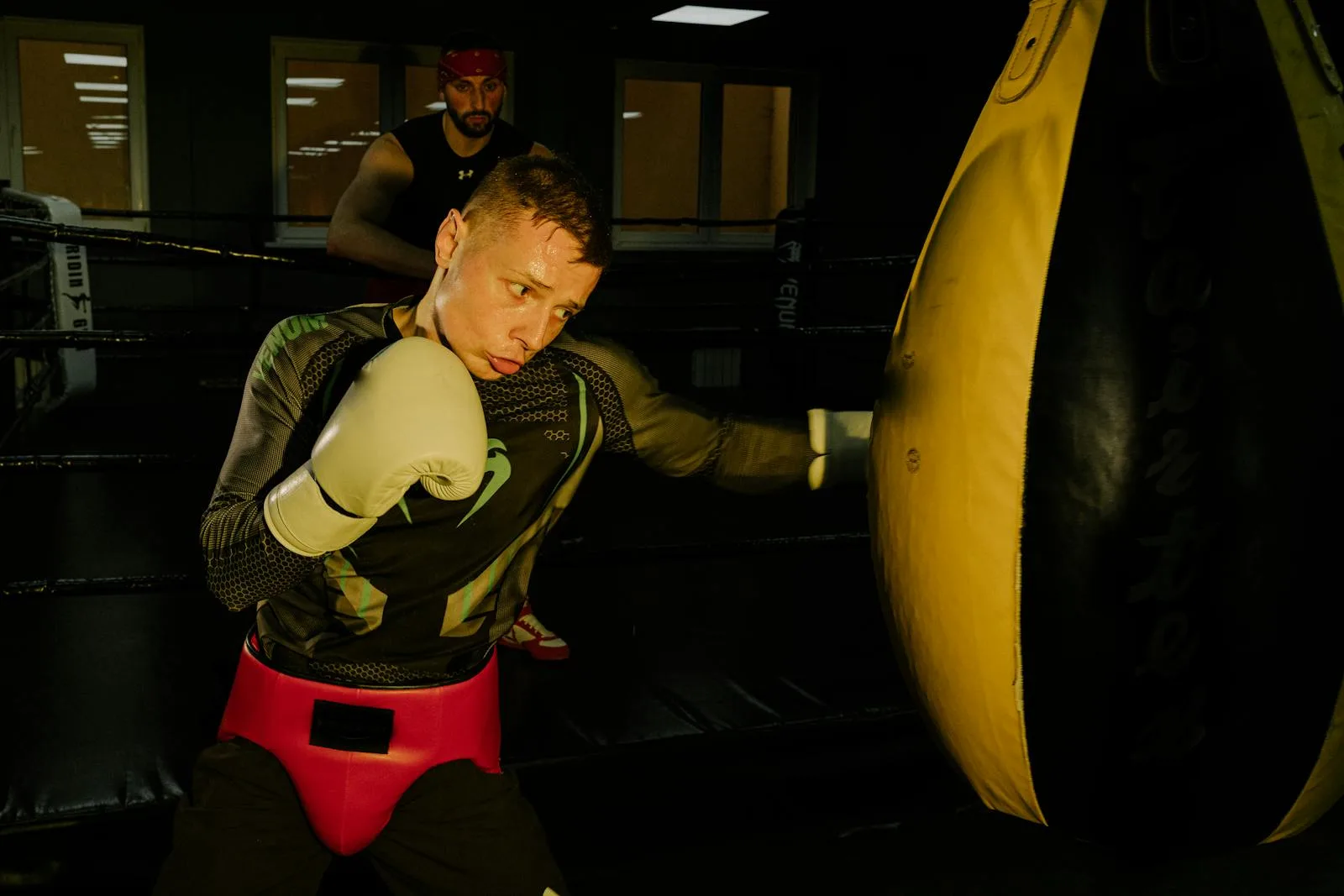
The bell rings and you're already a step behind.
The coach calls out a simple combination—jab, cross, reset—but your hands feel slow, your feet feel stuck, and everyone else seems to move in rhythm while you're still thinking about your weight. This is where most beginner mistakes start. Not from lack of effort, but from trying to do too much, too fast.
If you've walked into your first boxing class in Seoul and felt like your body wasn't cooperating, you're not alone. The early minutes of training reveal patterns quickly—tight shoulders, rushed punches, shallow breathing. None of these are permanent, but left uncorrected, they make everything feel harder than it needs to be.
Here's how those mistakes show up in real time, and how a coach would start fixing them.
Minute 1 — Your stance is already stealing your balance
Before you throw a single punch, your stance decides how the rest of the round will feel.
Most beginners stand too square, or too stiff. Feet flat, knees locked, weight evenly distributed—like you're posing for a photo, not preparing to move. It feels stable. But it removes your ability to shift quickly. When the first combination is called, your upper body goes, and your base doesn't follow.
A coach doesn't start by correcting your punches. They adjust your feet.
A slight turn of the lead foot. A small bend in the knees. Weight that's ready to shift, not just hold. Suddenly, movement feels less forced—you're not generating speed, you're allowing it.
Once your stance becomes functional, everything else becomes easier to learn.

Minute 5 — Your shoulders are doing too much work
By now you've thrown a few combinations, and your shoulders are already tired.
Not because boxing is too hard—because you're lifting your arms instead of letting them flow. Beginners often carry tension in their shoulders, raising them slightly as a form of protection. It feels safer. But it drains energy fast, and you'll notice it when your punches slow down after just a few rounds.
A coach will give one simple cue: relax your shoulders. Keep your hands up without lifting them.
It sounds minor. It changes everything. When the shoulders drop, the arms move more freely. The punches stop feeling forced.
This is one of the most common technique basics that gets overlooked—not because it's complicated, but because tension feels like effort, and effort feels like progress. Controlled relaxation is what actually keeps you going longer.
Minute 12 — Holding your breath makes everything harder
You don't notice it at first.
But halfway through a round, your breathing goes irregular. Short inhales, long pauses, then a sudden need to catch up. Many beginners unconsciously hold their breath when punching—especially when trying to get the timing right.
This is where training starts to feel overwhelming.
Your heart rate spikes faster than expected. Combinations feel rushed. Footwork disconnects. Not because your fitness is lacking, but because your breathing isn't supporting your movement.
The fix is simple: exhale lightly with each punch.
It resets your rhythm. Punches feel less heavy. Movement becomes more continuous. Instead of fighting your body, you're working with it.
Minute 20 — Power is not the first correction
At this point, frustration tends to show up.
You start hitting harder—trying to make the punches feel real. But the harder you push, the more your form breaks down. Feet stop moving. Shoulders tense again. Breathing goes. This is where beginner mistakes start compounding.
Power feels like the solution. It's often the problem.
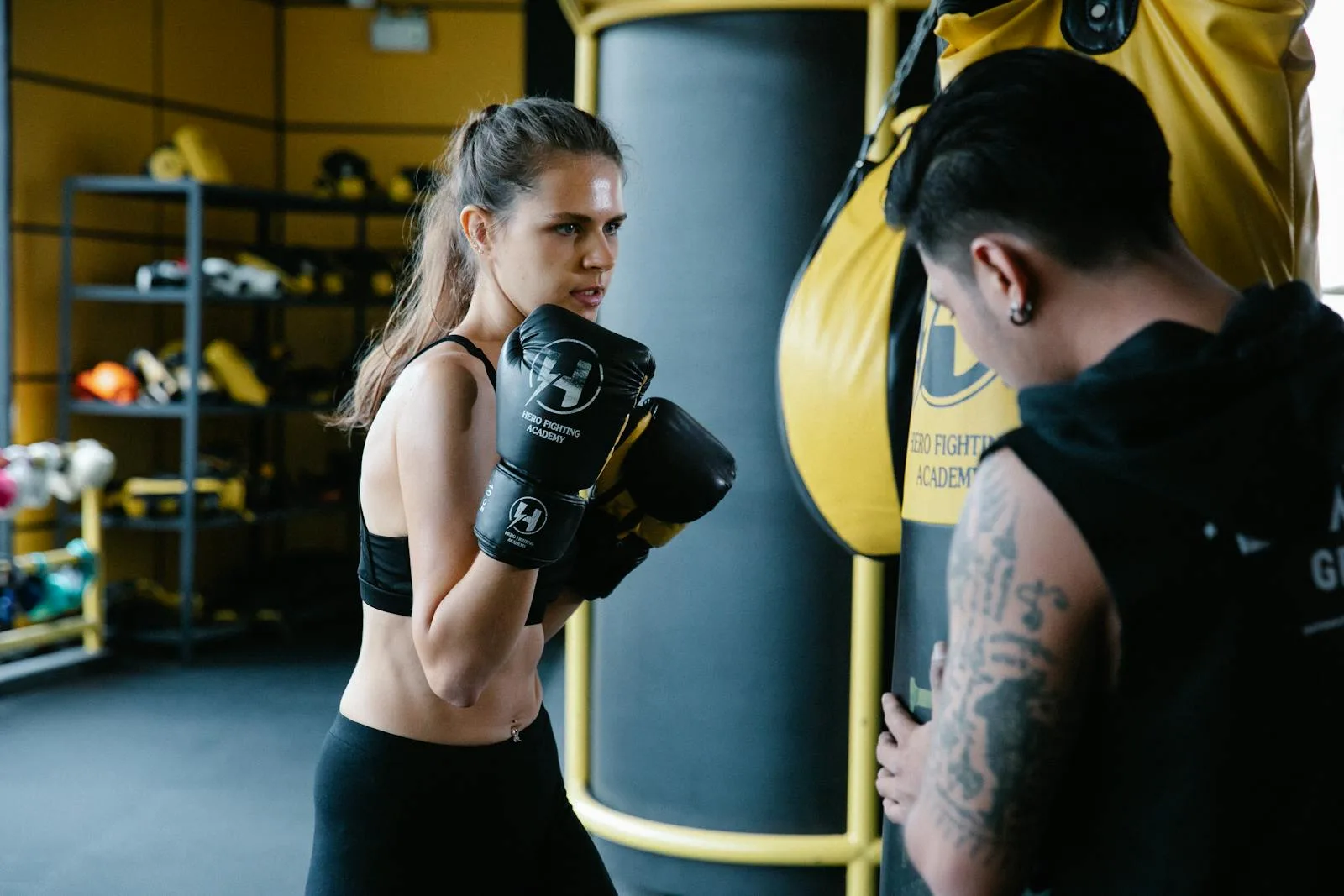
A coach will scale things back. Slower combinations. Lighter contact. Focus on timing and connection over impact. It might feel like a step backward—it's actually the first step toward control.
What a coach would fix first
Looking at the first 20 minutes, the pattern is clear: it's not about learning more techniques. It's about removing friction.
A coach prioritizes:
- A stance that allows movement, not just stability
- Shoulders that stay relaxed under light tension
- Breathing that matches the rhythm of your punches
- Power that comes after control, not before
None of these are advanced skills. But together, they change how the entire session feels—which is why beginners often notice a dramatic difference between their first few classes and later ones. Not because they got stronger, but because they stopped making training harder than it needed to be.
If you are still figuring out what a first session should feel like, this guide to your first boxing class gives the broader beginner context.
If you want a clearer first-session structure, Classes is a useful next step to understand how coached boxing sessions are organized.
Final takeaway
On your next session, don't try to fix everything.
Reset one thing at a time. Check your stance before the round starts. Let your shoulders drop between combinations. Breathe out when you punch, even if it feels unnatural. Ease off the power and focus on staying consistent through the round.
That's how your first session starts to feel manageable—and once it does, it becomes something you can actually build on.